Showing posts with label Mary. Show all posts

Monday, October 7, 2024


An Instagram follower asked some questions (in red below) about Catholicism. I asked that he write contact me via email, since the answer was too long for an IG comment. He did. Below is my answer.

Hi JR,

A bit about me and then I’ll try to answer questions you posed.  This will be long…but no apologies…well, it is an apology, of sorts…a defense of the Catholic faith.

My comments below, aside from my personal story, are the teachings of the Church, as best as I can explain them. They are NOT MY personal opinion. I hope to only convey what the Church teaches, not my own interpretation of Christianity. IMHO the buck stops with the Catechism of the Catholic Church (CCC), which is on-line and searchable ( https://www.usccb.org/sites/default/files/flipbooks/catechism/
Paperbacks and hardbacks are also available from most booksellers.

The CCC documents the centuries old evolved theology of the Church, it can be complicated, although historically well footnoted and referenced, and so there are trustworthy organizations who can explain Catholic teachings in plain language, and better than me, such as: https://www.catholic.com/

My  wife and I were born and raised in functional Evangelical Christian homes in Michigan. Our relationship with Christ has always been very personal from childhood. We raised 3 children and now have 10 grandchildren. All but one of our children and grandchildren and still Evangelical Christians. The story for our switch to Catholicism is long and humorous. I’m a writer and filmmaker and together Pam and I wrote a book about it. https://stanwilliams.com/NINEVEHSCROSSING/Order-GUC.php
I don’t need to sell the book to you. If you like I’ll give you a paperback or PDF.

The switch to Catholicism had all the normal doubts, as you expressed in your Instagram post: “I just don’t get the whole Pope obsession and worshipping Mother Mary aspect of Catholicism. Focus on Jesus.”

Those are honest issues and ones both Pam and I had, originally. 

But to back up, for me, I didn’t come to Catholicism because I “got” the Mary thing or the Pope thing. I have always been trying to figure out what church was the true Church. Being raised in a Bible believing (Jesus) home, I never doubted the authenticity of Christ as God incarnate, or the Gospel message, or the trustworthiness of the (Protestant) Bible. My faith was always strong, and even today as a Catholic my trust in the Bible or Christ has not wained, but in fact (as a Catholic) grown stronger. 

My break from Evangelicalism came in my late 40’s when I decided to resolve a life-long Christian contradiction. The problem I had, and had recognized from my teen years, was that there were multiple Evangelical and Protestant faith traditions (Baptist, numerous varieties), Methodists (several different kinds), Lutherans (there are 120 different Lutheran groups), and then a horde of different other Evangelical groups (my family was Free Methodists, which is very similar to Wesleyan Methodists, and Nazarenes.) 

What I realized in my teen years is that THEY ALL DISAGREED WITH EACH OTHER ON THE ESSENTIALS OF SALVATION, WORSHIP, DOGMA, AND PRACTICE. Yet, they all claimed to be led by the Holy Spirit in interpreting the Bible. But their detailed interpretations were all subtly different and fights and divisions broke out among the groups over these things. They didn’t disagree on the “non-essentials” as they often claimed. They refused to fellowship and worship with each other. Their disagreements were essential issues, to them. They disregarded Jesus’ prayer in John 17 that Christians all be ONE so the world would know that God the Father had sent his son into the world. But we weren’t one. We are separated and fighting. In my first 50 years of life I lived thorugh several church splits, mostly among independent churches, when the people and the pastor disagreed on what the Bible taught. It was an amazing contradiction to me, and not a paradox.

The disagreements continue to this day and are exacerbated on social media posts like TikTok and IG.

When our children became adults, moved out, got married, and had children of their own... I had time to contemplate and research the Protestant (protesting) problem. I decided the Holy Spirit was not schizophrenic; we Evangelical Christians were. But who was right? As I had before, I started church hoping, talking to theologians, and reading various protestant church documents. I was amazing how they all disagreed and yet claimed to only disagree on the non-essentials. I did that for 2 1/2  years, each Sunday always going to church (somewhere), always reading my Bible and praying, et al. My wife, Pam, continued at the independent church we had raised our children at…two of them ended up marrying out of the teen youth group there, and where the still attend yet today. 

One day, (during my 2 1/2 years of research) out of frustration, and having avoided Catholicism, I walked into the local Catholic Church. Actually, there were 5 nearby Catholic parishes. I walked into the closest one and attended Mass. What happened in the next three weeks surprised me. Several of the things I had been told about Catholicism were clearly false. 

(1) They didn’t read the Bible….yet the first half of every (Novus Ordo) Mass is all Scripture from the OT, Psalms, NT Epistles, and a Gospel.   

(2) Catholics don’t know what they believe…yet everyone in the congregation (which was large) recited the Nicene Creed without having to read the text….except me. I was familiar with the Nicene Creed (which is longer than the Apostles Creed) but I didn’t know it by heart and I was embarrassed. 

(3) Catholics worshiped saints (and Mary) and not Jesus…except the entire Mass was centered around the person and sacrifice of Jesus Christ, who was invoked more than 50 times during the Mass 
 
(4) Catholics are into repetitive ritual and just go through the motions…I think this can be true for many Catholics, just as it is for Protestants, the rituals are just different. Some Evangelicals today will sing the same 8 word lyrics in a praise song, 50-60 times, invoking the idea of “vain repetitions.”  But the second half of the Mass, while all ritual, caught my attention because it was essentially a 30-minute prayer (of articulate and uplifting words) in worship to Jesus Christ... for his sacrifice, his salvation, his grace, and God’ mercy, all ending in communion ("For as often as you eat this bread and drink the cup, you are proclaiming the death of the Lord, until he comes again"  - 1 Corinthians 11:26… and yes, the second half of the Mass is almost all Scripture as well.) 

That began my 8-month investigation into the dogma, doctrine, practices, and devotions of the Roman Catholic Church. I won’t go into it all now, of course, but there was an evening when I realized that Catholicism was Church Jesus founded, and everyone else (including the Orthodox) was protesting something that was taught by Christ and the Apostles from the first century. While I had found numerous logical and linguistic contradictions in Evangelical and Protestant Christianity (between what they stated doctrinally and how I interpreted the Bible), I FOUND NO LOGICAL OR LINGUISTIC CONTRADICTION between the Bible and Roman Catholic doctrine. 

(This all happened as I was writing my doctoral dissertation that involved a deep analysis of logical and linguist fallacies…which I was able to identify in Protestantism and yet could not find in Catholicism.)

Now, that realization did not come quickly. It took me 8 months of reading dozens of books (by Catholic theologians and apologists), studying the Catechism of the Catholic Church, and comparing it all to the Bible and Evangelical and Protestant teachings.  There was a moment, however, when the scales fell off my eyes, and I turned from skeptics to advocate, and became anxious to come into the Catholic Church. My wife and I have a large blog of many articles and essays. Here in the one that explains the turning point for me; it’s a commentary on John 6.

The realization of what Christ taught in John 6 was very surprising to me, because as a teen I had memorized large portions of the Gospel of John for Bible Quizzing, in which I was active for years. But I had been blinded about understanding John 6, as the link above reveals.

Okay, enough for now. This is long. Let me comment on your post’s concerns:

1. Pope Obsession.

“Obsession" is perhaps an appropriate word for folks outside the Roman Church. I don’t obsess about the pope, but I can see how others see see it that way. Here are some thoughts:

The pope’s job is not to declare doctrine or dogma, although historically that does happen, but in a very collegiate way. Never has a pope declared a doctrine all by himself. Doctrines are decided in a council of hundreds of bishops and priests from around the world who are brought together to decide what is true because of a perceived heresy that is spreading through society and the church. The first example of this is the Jerusalem Council documented in Acts 15. There, you will see discussion about the issue of circumcision the church was struggling with, and how they arrived at a decision…under the guidance of the Holy Spirit. They were very much aware that Christ left them an infallible guide (the Holy Spirit) as to what was true and false. What Christ said about their search for what is true is still in every Christian Bible today. Christ tells his disciples in John 16:13: “When the Spirit of truth comes (the Holy Spirit) he will guide you into all the truth.”  and then in Matthew 18:18 “Verily I say unto you, Whatsoever you shall bind on earth shall  be found in heaven; and whatsoever you loose on earth shall be loosed in heaven.”  and  Matthew 16:19 Jesus is speaking to Peter, “I will give you the keys of the kingdom of heaven; whatever you bind on earth will be found in heaven, and whatever you loose on earth will be loosed in heaven.”  Notice Christ isn’t saying this to every Christian, but to his Apostles and those they laid hands on to ordain and to carry on leadership of the Church. 

There are other Scriptures, too, but those three will suffice for now. Never in the history of the Church has the Pope unilaterally declared a doctrine without the whole  “church” discerning the will of the Holy Spirit, and coming to a decision that often has taken decades to decide. The church moves slow and always as a whole.

Consequently, it is claimed that no doctrine has ever been declared that:

a. contradicts an earlier doctrine….although there are decrees and administrative and legal decisions that are reversed once their error is recognized. But none of those are declared doctrines or teachings, but rather practices, e.g. the Novus Ordo vs the Latin Mass. (There is a hierarchy that goes like this: (1) Dogmas, (2) Doctrines/Teachings, (3) Legal Administrative Rules, (4) Local Practices, (5) Personal Devotions. )

b. contradicts the approved canon of the Bible, when taken as a whole...the Church decries the Protestant practice of taking “proof texts” to proclaim a doctrine when there are other Scriptures and contradict the proof texts.

c. contradicts what was taught in the Early Church as documented in the record of Early Church teachings found in the writings of the Early Church Fathers, and of course conforms to a. and b. above.

So, what is the Pope’s job and why is he important.

a. The pope administers the church organization as the president of a country might, sometimes with the approval of councils, and others. But he cannot legislate dogma or doctrine.

b. The pope is the chief pastor, and in so doing decides on the teaching emphasis for a period of time, sometimes focusing on a series of teachings for weeks on end, like a pastor might from a pulpit, or declaring a spiritual emphasis for a year (e.g. The Year of Faith, or The Year of Mercy). The pope will also write major documents (Encyclical  letters to the churches) that clarify church teaching in the current cultural climate.  (e.g. a favorite of mine: "Fides Et Ratio, on the relationship between Faith and Reason" by John Paul  II. These are often written by the pope in cooperation with theologians on his staff or advisors.)

c. The pope reflects the hierarchy of Christendom. He is the vicar of Christ. He represents Christ on earth. EXCEPT the pope is not God, he is not worshiped, he sins, and goes regularly to confession. 

d. The pope like all CEO’s appoints bishops, cardinals, and makes administrative decisions that coordinates, and (hopefully) makes the world’s largest and longest surviving institution function smoothly.  But in the end, all popes are imperfect. Some do a better job than others. Some are clearly in hell. (my opinion)
In the case of Pope Francis, we have an example of how NOT everything he says (as reported) even agrees with Church teaching. He has been roundly criticized for this spiritual and practical emphasis and his writings. John Paul II was an exceptional pope and was declared a saint soon after his death. Like many bad popes in the past, I doubt Francis will every be declared a saint.  (In the USA we have had good and bad presidents, but the institution, so far, is robust enough to still exist and function.)

So, that’s a take on our “obsession” with the pope. Someone needs to be in charge. Ultimately, it’s Christ. Christ needs a head on earth to avoid wide spread confusion…as in Protestant denominations. When everyone decides for themselves we end up with thousands of denominations, doctrines, and disunity…reinforcing to skeptics that perhaps God did not send Christ to save the world (c.f. John 17)

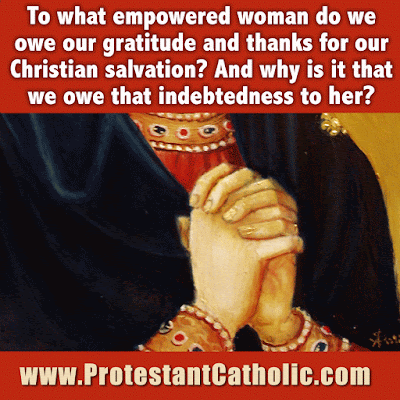
2. Why do we worship Mary?

We don’t. We greatly honor her as the key human in the crux of history, the incarnation of God. God became man through Mary’s willingness: “Behold I am and handmaid of the Lord; be it unto me according to thy word.” (Luke 1:38)… upon that declaration of her will all history changed. Catholic doctrines teach that we are only to worship and adore the Trinity (God the Father, Son, and Holy Spirit).  We honor Mary as she and Elizabeth prophesied in Luke 1. Elizabeth calls Mary the Mother of God, and Mary tells us she will be called “blessed” by future generations. These words are partially reflected in the prayers of the Rosary.

But, some will say, “You pray to Mary…that’s worship.”

No, that’s equivocation. That’s defining “pray” or “praying” two different ways. Protestants (mostly Evangelicals) will define “praying” as “worship.” But the historic definition in Catholic theology, and the one used the courts of law, is to “request something of another in higher standing,” not worship.

Thus, in the Catholic sense, praying to a saint in heaven is not worship. It’s communication with those in heaven. Besides, the saints and Mary are not dead. The Bible teaches us this. Here’s an answer from perhaps the best source of answers on Catholicism. I know several of the men who run this long trustworthy organization, and am friends with their internet answer man: https://catholic.com


The Bible does teach that the saints are alive. Consider, for example, that Jesus teaches that the God of Abraham, Isaac, and Jacob is “not God not of the dead, but of the living” (Matt. 22:32; see also 22:23-33). In addition, Moses and Elijah are alive to Jesus at the Transfiguration and converse with him, even though their earthly deaths had occurred many years before (see Matt. 17:1-8). 

We pray to the saints in the same way we ask a fellow Christian to pray for us. 

To be clear, there is a common misunderstanding of what Catholic believe — that by praying to Mary she takes the place of Christ as our intercessor before God. That is a wrong understanding. JR, as I may ask you to pray to Jesus for my need, and as you may ask me to do so for you, so we can ask saints in heaven to pray to Jesus to intercede before God for us. We say Mary is the Mother of the Church, reflecting when the Apostle John was given Mary by Christ at the foot of the cross to care for. “Behold your son, behold your mother” (John 19:26-27). The analogy is of a child who goes to his mother and asks her to intercede to the child’s father. Mary asks Jesus, Jesus is the ONLY way to God the Father. 

The charge is often made that the saints are dead. But this is hardly true. Revelations 5:8 speaks of how the saints are offering our prayers before the throne of God…so they must be aware of our prayers. 

Another charge is that there is only one mediator between God and men, the man Christ Jesus (1 Tim 2:5). But this in no way means I can’t ask you, or a saint, to pray for me. Christ is still the only mediator to God the Father. 

Your last note was
3. Focus on Jesus

You are totally right. And the more you know about Roman Catholicism, the more you’ll discover that focus is the sole role of the Pope, bishops, and priests, and people like me who defend the Catholic faith. It is all about Jesus, his life his passion, death, resurrection, and reigning with the Father today. I would encourage you to attend Mass on a regular basis and discover how the Mass is entirely dedicated to Christ. But be wise. Occasionally, like today,** the Mass celebrated Our Lady of the Rosary...and to the uninformed it may appear as if the Mass was all about Mary and our worship of her. WRONG!

We honor Mary greatly because everything MARY DOES POINTS TO JESUS. Remember at the Wedding at Cana, she tells the servants who were serving the wine, “Do whatever he tells you.”  Mary tells us the same thing. DO WHATEVER JESUS TELLS YOU TO DO. 

Also, although you didn’t ask, the Rosary prayers are all about mediating on the life of Christ through the eyes of Mary. More about that another time, or you can look up on the Internet how to pray the Rosary. The repetitive “Hail, Mary” (which is found in Scripture) is only a pacing device while in our minds we contemplate being with Jesus and learning what Mary learned at His side. It’s about Jesus.

Notice this important thing about Mary. God came to man in the form of Jesus Christ THROUGH Mary. Mary was the conduit, the vessel God chose to present Jesus to the world. So, it would seem natural that Mary would be a conduit for us to approach her Son, and through her Son...God. 

 ** We typically go to Mass most days of the week…weekday Masses are shorter than the Sunday Mass, which are also shorter than special festival Masses like at Easter and Christmas which are hours long.

Blessings,

Stan WIlliams

Monday, February 25, 2019

The Passion of The Christ Analysis

Mel Gibson and Jim Caviezel in THE PASSION...
This is a long post. You can save it as a PDF and print  it out for study. Use the green PRINT PDF tool in the right column, just below the fold.

THE PASSION OF THE CHRIST (2004)

Director: MEL GIBSON
Writers: BENEDICT FITZGERALD, MEL GIBSON
Stars: JIM CAVIEZEL, MONICA BELLUCCI, MAIA MORGENSTERN


CHARACTER TRAITS

In my Moral Premise Secrets of Successful Screenplay workshops I illustrate five (5) key traits of protagonists found in successful stories. In brief, the protagonist must: (1) be IMPERFECT, (2) STRIVE TO CHANGE, (3) pursue an OUTER, VISIBLE GOAL, (4) be impeded in reaching that goal by a PSYCHOLOGICAL NEED, which has (5) created INSURMOUNTABLE PHYSICAL OBSTACLES.

THE "PERFECT" PROTAGONIST

Regarding the first trait, I warn writers not to write stories about perfect protagonists, because audiences can't identify with perfection. Audiences subliminally know: (a) they are personally far from perfect and (b) everyone has a weakness or vice. It's also (c) hard to root for the perfect to be better, although (d) audiences will root for characters who fall into bad circumstances beyond their control, or who don't deserve ill treatment heaped on them.

By definition, protagonists typically struggle with some vice or weakness, and through the circumstances of Act 2, transform that vice/weakness into a virtue/strength, return from their Special World of Act 2 with the discovered elixir in hand, and save their village from annihilation. Ironically, the "perfect" protagonist, is perfect only because in Act 1 she is imperfect, and by the end of Act 3 is a little less imperfect.

Finally, because the audience was on the sidelines cheering-on the protagonist throughout the struggle, the audience is made part of the journey...and they too are transformed. Such is the magic, the miracle, and the great attraction of a story well-told.

HEROES ARE NOT PROTAGONISTS

There are, however, successful movies (and novels) about near perfect protagonists.

Tuesday, December 25, 2018

Yes, it's a bumper sticker and car magnet all rolled up into one. BLESSINGS ALL.

Wednesday, August 10, 2016

10 Objections to Mary

With Scripture and Reason's Response
with a tad of common sense

Stan Williams, Ph.D.

Objection 1
Mary was just a regular girl with nothing special about her.
Don't make more of her than God did.

Mary is not the only person in Christ's lineage.
She shouldn't be considered more important THAN say the incestuous Judah,
the prostitute Rahab, or the adulterer David.

In Scripture, Mary is proclaimed as part of God's salvation plan before the world was created.
Rev. 12:1-6; 13-19

In Scripture, Mary is found as the only human being consistently mentioned and associated with the incarnation and the eternal plan of salvation from Genesis to Revelation.

n     Rev: 12 (what we just read) - the woman is part of God's plan.  21 references to the woman.
n     Gen 3;15 - the woman is not a spur of the moment concept. God sees time as we see space, all at once.
n     Note: These two references are perhaps not coincidence to Jesus' use of the term to his mother in John 2
n     Is 7:14
n     Micah 5:2-3
n     Matt (Mark?) Luke, John
n     John 19:26-27 - Mary the mother of the church
n     Galatians 4:4 - fullness of time - born of a woman


Objection 2
Mary was born in sin and she sinned throughout her life
just like everyone else.

This objection uses Romans 3:23 that says "all have sinned." and 1 John 1:8 says "If we say, 'We are without sin,' we deceive ourselves and the truth is not in us."  "ALL" means just what it says "ALL, everyone, without exception…except Jesus of course."

The problem we face here is that there are other Scriptures that imply the opposite and

Monday, April 25, 2016

Mary and the Saints - Excerpt from Common Ground

Common Ground 

- What Protestants and Catholics Can Learn From Each Other

Pastor Steve Andrews & Father John Riccardo

Published and Distributed by Nineveh's Crossing. www.NinevehsCrossing.com

http://ninevehscrossing.com/CommonGround/CGOrder.php


Chapter 15 - Mary and the Saints

FR. JOHN: So, we do not worship her, we worship God alone. We do honor her, just like you honor your two friends who are back in Kenya.

PR. STEVE: Yes.

FR. JOHN: That's what we do as persons. Unfortunately you see it all too often in sports or entertainment. You know, we're going to honor people who made movies that none of us would ever go see, but somehow we're going to tell them that they were great works of art. We honor them. We honor somebody who's 6'9" who can dunk. I mean if we honor those people for doing things which have nothing to do with character, then how much more do we honor the saints, both alive and dead?

PR STEVE: For a Protestant to say I have a relationship with Jesus, that's normal. But to have a relationship with Mary, that'd be unusual. I'm really looking to understand this too. Is it to have a relationship with Peter as well? To be engaged with the history of our faith, with the people of our history?

FR. JOHN: Yeah, because our claim would be

Saturday, May 24, 2014

Devotion to Mary

[A GRAMBUS post adapted from MARK MIRAVALLE]

All relationships, of course, are a two-way street. They require something from us — phone calls and visits, acts of thoughtfulness, time spent together. They demand that that we give some­thing of ourselves to the other. In our relationship with Mary, she helps give new life to our souls, prays for us, and provides us with what we need to grow in grace. In return, she deserves our honor and love, just as our earthly mothers do. She deserves our devotion.

To make sure we’re all on the same page, I want to spend a little time explaining what I mean by devotion. The word can have more than one meaning, and the Church uses Latin terms to help us dis­tinguish between the kind of devotion we give to Mary and the kind of devotion we give only to God. These words are dulia and latria.

Latria basically means adoration. Traditionally, it refers to the worship and homage that we give to God and God alone. When we adore God, we acknowledge him as an excellent, perfect, uncreated, divine person. We give him what he alone, as God, is due.

Dulia is very different.

Thursday, December 12, 2013

Our Lady of Guadalupe

[A GRAMBUS post.]


Our Lady of Guadalupe tilma.
I don't know why, but I have been very impressed by the Feast Day of Our Lady of Guadalupe this year, ...which is today!  I love this story and the beautiful outcome of it in so many souls converted to Christianity.  So, I've been reading a lot and have come across something I'd like to share, written by someone who has studied this historical event and its meaning for some time.  I hope that his insights bring the value of this event ever more radiantly to your mind and heart.

OUR LADY OF GUADALUPE by Monsignor Eduardo Chavez Sanchez

The image of Our Lady of Guadalupe imprinted on Saint Juan Diego’s humble tilma manifests two of the most important dogmas of Mary:  that she is ever-Virgin and, at the same time, that she is the Mother of God.  In fact, the encounter that took place in the winter of 1531 is an encounter with God himself, whom our Lady carried in her immaculate womb.  It is a real encounter with Jesus, who has taken the initiative to meet man through his Mother.
…Since our Lady carries the Lord in her womb, she appears as a pregnant woman, an expecting woman, a woman of Advent.  The image of Our Lady of Guadalupe depicts a dark ribbon above her womb, indicating that she is a woman anticipating the birth of God’s only Son.  In fact, the Spanish expression for “pregnant” is encinta, or literally, “adorned with ribbon.”

The original tilma of Saint Juan Diego,
which hangs above the high altar of
the Guadalupe Bascilica.
Before a priest celebrates Mass on the feast of Our Lady of Guadalupe, December 12, the people tell him: “Focus on the womb of this woman, who dances with the joy of the feast, because she will give us her Son.  With the harmony of the angel holding heaven and earth [referring to her mantle and gown], a new life is extended.  This is what we received from our elders:  that our own life does not end, but has a new meaning, and as the Great Book of the Spaniards (the Bible in Revelation 12:1) says: there was a sign in heaven, a woman dressed with the sun, with the moon under her feet and a crown of stars, and she is about to give birth.  This is what we are celebrating, Father: the arrival of this sign of unity, harmony and a new life.”

With Our Lady of Guadalupe, this sign [Jesus] has finally arrived.

Monsignor Chavez was the postulator for the cause for canonization of Saint Juan Diego, and is co-author of Our Lady of Guadalupe: Mother of the Civilization of Love (Doubleday). 

Monday, October 14, 2013

Why Give Special Honor to the Mother of Jesus?

[A GRAMBUS post.]

Maybe You Didn’t Know this Before about Mary

This blog is in answer to a friend of mine who wrote: 

"Personally I think Mary would be appalled at the place the Catholic church has given her. Where is the Scriptural teaching that Mary, while clearly blessed to be the servant that the Father used to bring His Son into the world, is anything more than that, let alone be Revered as she clearly is by the Catholic church."

She is honored more than any other human being because she is the Mother of God.  She was chosen by God the Father to bear His Son.  She conceived in her womb by the Holy Spirit.  That is a very special role/calling/choosing from the Holy Trinity.  And, God, being a holy and righteous God, required that she be sinless/set apart/holy.  Why wouldn't Almighty God want a holy vessel for His holy Son?  Why would the God who demanded holy vessels for the tabernacle in the Old Testament not demand that of the vessel who would carry the holy Son of God in her womb and heart?

In Revelation,  at the end of chapter 11, when John is looking into heaven he sees that, "...the temple of God was opened in heaven, and there was seen in his temple the ark of the covenant..."  As chapter 12 begins, you might think that John’s vision of the Ark of the Covenant in the Temple is at an end, but what if it's not?  What if John is continuing to describe what he sees, ...only it is the fulfillment of the Old Testament Ark?  Chapter 12 begins to describe "...a woman clothed with the sun, and the moon under her feet, and upon her head a crown of twelve stars."  Why, does John describe a woman?  Because, that woman IS the Ark of the Covenant he saw—the living arc of the New Covenant.  What did the Ark of the Old Covenant contain?


      1. Manna, that God provided the Israelites to eat for 40 years in the desert
      2. Tablets carved with the Ten Commandments, received by Moses from God
      3.  Aaron's rod that budded

What are those types of/symbols of?  Christ!
      1.  The Living Bread, come down from heaven
      2.  The Word of God made flesh
      3.  The Resurrection & the Life

So, if the contents of the Old Covenant Ark were symbols of Christ, then the Ark itself was a symbol of Mary.  Mary IS the TRUE Ark of the New Covenant, and John rightly described that Ark as a woman.  And, that woman is The Blessed Virgin Mary. 

Now, let’s take a side journey and think of why she is called the Virgin Mary and why the Catholic Church believes that means it was a Perpetual Virginity.  The most obvious reason was that the angel’s announcement/proposal from God said that she would not conceive from man but by the Holy Spirit.  This is a marriage proposal, and the intended Spouse for Mary is the Holy Spirit.   But, let’s go back to the Old Covenant Ark again.  If you recall, no man could touch the Old Testament/Covenant Ark.  It had to be transported on poles carried on the shoulders of the priests who never touched the Ark itself. Likewise, no man could touch the New Testament Ark of the New Covenant—Mary.  She was holy, set apart, full of grace, sinless/spotless, as the vessel that would carry the Christ child, God’s Son.  God the Father chose Mary to be his Spouse.  When she answered His proposal, with her beautiful “[Yes]…be it done to me according to Your word,” she was overshadowed by the Holy Spirit in such a way that she conceived Christ in her womb.  Though she was betrothed to Joseph, her union with him was not ever to be consummated, thus making more sense of Mary’s question of being able to conceive when she “…[knew] not a man.”  Otherwise, she would have assumed Joseph would become that man.  Oral Tradition says that her parents dedicated her at the Temple to be set apart for God as a virgin.  Joseph’s betrothal was understood from the very beginning, to be for the protection of a virgin in a society where women did not venture "out" alone.  According to Oral Tradition, Joseph was also many years older than Mary, and a widow with sons from his previous marriage.  So, that makes sense why other scriptures refer to Jesus’ brothers—even though it was also common to call cousins "brothers" in that culture, as well. ...thus, another explanation for the reference to brothers of Jesus.  But, the greatest reason to believe in Mary’s perpetual virginity is that God chose her as His Spouse, so He had exclusive claim to her, and no man could touch her.

Getting back to John's vision, the woman is clothed with the sun, with the moon under her feet.  That's how you would describe a person who has great honor in heaven, so why not on earth?  With a crown containing 12 stars?  I guess she's pretty much looked up to as a queen, …the Queen Mother!  And, all of the Apostles (12 stars) would agree.  That is why she is revered!  Because, heaven agrees with her crowning, by means of Holy Scripture in Revelation, and because Jesus’ closest disciples, who are the foundation of the Church agree as the very stars in her crown.  So, who are we to disagree with all of heaven? If God ordains the crowning/the honoring, we should, too!

Plus, the 4th Commandment tells us to honor our father and our mother.  And, Jesus as the perfect Son, knows how to honor better than anyone.  Shouldn't we follow His example?  It is his desire that his mother be honored as Queen of Heaven and Earth.  Again, the Father God chose her for His Spouse.  No one else comes near her status among human beings.  The Catholic Church did not make this up, and they would never ask anyone to worship her as a god.  But, honor her?  Yes!  Ask for her prayers to her Son on our behalf?  Yes.  (Don’t you ask people on earth to pray for you?  How much time have your friends spent with Jesus?  Mary spent 30 years—ten times more time than any of his disciples, as I heard someone recently say.)  Pray the rosary—which highlights all the high (and low) points of the life and mission of Christ on earth and heaven for prayerful contemplation?  Yes.

So, get to know the most humble, most holy woman to be born on earth.  And, don’t be afraid to honor this “Holy Mary, Mother of God!”  And, ask her to “Pray for us sinners now, and at the hour of our death. Amen.”

Thursday, April 19, 2007

Who Would You Pray With?

Imagine you are one of Jesus's many disciples in the Jerusalem Upper Room, some forty days after Jesus had been crucified, died and was buried. You saw all that. But since then, it's been reported that he came back to life, and has appeared to a number of people, including the Apostles. But he has not appeared to you. You don't know what to believe. So, you're hanging out, praying day and night, and sacred to death.

A few days earlier out near Bethany, the Apostles reported that while they were with Jesus he suddenly rose into the sky and disappeared into heaven. But you didn't see it, and so here you are with the 120...left alone...or so it would seem.

During that time, Peter said they needed to choose a successor for Judas, who had turned out to be a traitor and had killed himself. After some prayer the Apostles drew lots and Mathias was added to the eleven.

But there was, it seemed to you, a lot of uneasiness, confusion, and definitely wonderment about what to do next. Indeed, the disciples appeared to lack motivation. Perhaps they were waiting for what Jesus called the Comforter to come, whatever that was. And so, they were unsure, and so were you, about what would happen next.  (cf. John 16:12).

Imagine you’re there. You’ve found a corner in which to sit, pray and sleep. But you’re a little frightened. The horrific, bloody crucifixion of Jesus is still etched into your mind’s eye, even if you did keep your distance. At least twice a day now you walk past the bloodstained corner where the soldiers forced a man to help Jesus carry the cross. Jesus had been too weak to carry it. You never saw Simeon before that day, but now he’s in the room with the others, a few men gather around him talking quietly. 

You look across the room at a lady who forced her way past the guards and wiped Jesus’s face with her veil. She clutches it, still bloody, in her lap. Around her women gather, they finger the cloth as if it was sacred.

You’re alone. No friends or relatives of yours would come near this band of zealots and fanatics. Why you’re here, you’re not sure. But you’re drawn. Who can you talk to? Who can pray with you? Whom do you trust?

Then it occurs to you that there is one person in that room you have wanted to talk to above all others. Of everyone there, you realize there is one person that knew Jesus the best, and whose faith in what might or might not happen next is the most serene. Of course, you had seen the miracles, the healings especially were amazing. But this person, for decades, had seen and remembered far more than all the rest of the disciples combined. Here was a bastion of faith and grace that probably knew no bounds. But getting past the crowd would be a task, especially for one as shy as you.

You keep looking for a chance. You need someone to put an arm around you and pray for you. You need a smile. You long for hope.

Little by little you find your way to the far end of the room, where many are gathered. You push your way past Peter’s large frame, and peek past his cloak. The quiet face looks at you and smiles, beckoning you forward. You pull your cloak close, and sit on the floor at her feet. Speechless at first, you gather your courage and say:
Hail Mary, full of grace, the Lord is with you. Blessed art thou among women. And blessed is the fruit of your womb, Jesus. Holy Mary, Mother of God, pray for me... now, and at the hour of my death. O Blessed Mother, pray for me.

Sunday, December 25, 2005

Merry Christmas and the Spirit of Individualism in America

"Merry Christmas"
and the spirit of individualism in America
Stan Williams, Ph.D.

During this Christmas Season, more than others in recent past, I’ve noticed the onslaught of public sector officials to rewrite history and the fundamental reason we take off work this time of year. To some of those whom we elect or appoint to positions of authority, the separation of church and state has become life’s obsession. No longer is it Merry Christmas, but Happy Holidays, or Season’s Greetings. We’ve even seen this revisionist shift in Christmas Cards (ah, excuse me, Holiday Cards) from otherwise well-meaning Christians, including the White House.
But this just makes sense to me. At least it is consistent with America’s history of protesting and maniacal obsession with individualism. In America, the land of the free, we should be free to think and conclude whatever we want (ah, excuse me, that should be “whatever ME want”). The reality and truth of history, or the reason for the season, is no match for individualism.
This is an interesting twist on the concept of democracy, or the rule of the majority, especially when our attention, with the fight for democracy in Iraq, is so often a front-page news item. Of course, we have never lived in a pure democracy, but rather a democratic republic. Yet the democratic principles are still on the books. That is, the will of the majority should take precedence and not the will of the minority and surely not the will of the individual. Although that too is changing.
We give lip service to democratic principles because we believe that there is some truth in what the majority believe, hold dear, and embrace as truth. Underneath the concept of democracy and our fundamental pursuit of happiness is the Biblical concept that God has written His Divine conscience on all of our hearts in the form of a natural law that keeps our minds rooted in reality the way gravity keeps our feet rooted on Earth.
Democratic principles and our institutional sense of right and wrong brings me back to the importance of the meaning of words. Words have etymologies, or a history of where they came from and why they are used. Words express a culture's remembrance of truth through a default sort of democratic principle. Words are not voted on in a polling booth, but are imbued in the rules of language by the use of the majority. As time and events shape a culture’s identity, so words change to reinforce what is learned and what should be remembered. Certain words change in subtle ways and take on new, but not always more truthful, meanings. Unfortunately, our culture’s obsession to remember history in certain ways drives the move to change, not just the meaning of the words, but to change the actual words as well. Thus, we are in the midst of changing from “Merry Christmas” to “Season’s Greetings.” Even “Happy Holidays” is being discouraged because the term Holidays is a permutation of the original phrase “Holy Days.” And while the term Holy means to be “separated from,” and individuals in America just love to be “separate” (it has a distinct, adventurous connotation don’t you know)... few Americans want to be identified with the institutional church that repressively declared what days were to be holy and celebrated “apart” from our everyday, secular lives.
But this is to be expected in America. Specifically, it is to be expected because “Merry Christmas” is itself a permutation, and shift from history, and from reality. “Merry Christmas” is the perfect idiom for America, the land of the free, the brave, and the individual. “Merry Christmas” sounds safe today, but it’s entomology points to King Henry VIII’s Act of Supremacy, and the British Parliament's subsequent Penal Laws that were also successfully applied in parts of the American Colonies.
If you’re unfamiliar with that part of British and American history here's a synopsis. The Act of Supremacy (1534) and the Penal Laws (beginning in 1559 and continuing for centuries) were successful attempts to erase a part of history and suppress the roots of Western religious culture, replacing them with a protest against institutionalism. These legislated acts established the King of England as supreme head of the Christian Church and outlawed the evil practice of Catholicism with exile or death. Never mind that a few years earlier (1521) Henry VIII was declared "Fidei Defensor" (Defender of the Faith) by the Pope for defending the Catholic Sacraments against Martin Luther's rebuff, and never mind that to this day the initials F.D. appear on all British coins to celebrate that fact. The Act of Supremacy was the ultimate protest and helped to reinforce the concept of "Protestantism" as a powerful word ladened with historical meaning. As much as the Act of Supremacy established the British Monarchy as an institution, it was ironically the ultimate act of individualism — the supreme act of a King to press his individual will on an entire culture and force it to forget its roots and change its religious practice under penalty of death. Two hundred years later, this cultural embrace of individualism would create quite a problem for the British Monarchy when America wanted to be separate, and take individualism to the next level. But at the time being a protestor against institutional authority was very popular.
And so it is that the phrase "Merry Christmas" carries on this protesting tradition to shroud our roots in fog. In an etymological protesting sort of way "Merry Christmas" might remind us how a woman and a man put their individualism aside and obeyed the greatest institution of the Universe. "Merry Christmas" should remind us that the individual is very important to God, but only when that individual obeys God. But "Merry Christmas" doesn't do that very well, unless you strip away its protesting artifacts and go back to the original words. There you will find three words that were the focus of this most holy of days: Mary, Christ, and Mass. For it is in the Mass that we remember Mary's obedient "yes" to life, and Christ's obedient "yes" to death. It is at Christmas, in the Christ Mass, that we celebrate the incarnation and the selfless cooperation between God and a woman that made salvation from individualism and self-importance possible.
Words have meaning... and, unfortunately, "Merry Christmas" doesn't say it all.