I have wanted to do this pilgrimage for awhile. Thank yo for taking me on your journey. "Who is like unto God?"....No one. As a solider in Christ, I salute the Prince of the heavenly army and lift up the sword of the Spirit. O Glorious Sword given to Michael the Archangel, by the Eternal Father of the celestial realm.... (@daisyd2392)What an excellent documentary! 💜 I'm currently doing St. Michael's Lent and this really inspired me to do such a pilgrimage! I really appreciate the real life traveling struggles! You never see this side of things on a Rick Steves travel program! 😆 Forwarding this to everyone I know! 😊 (@Diamondkiwi14)A highly informative documentary worth watching! It inspires and motivates to start the pilgrimage along Saint Michel's Line. I am honored I could take part in it. (@joannapyrgies) [Joanna is featured in the documentary sharing her archaeological expertise. I interviewed her in Dublin. Thank you Joanna, your world travels and knowledge added much to the project. S.W.]I have always dreamed of doing this pilgrimage. Wish I could have gone with you. That the Star of the Sea shines at the tip of St. Michael's sword is no coincidence or imprudence to me. It only points out that St. Michael points us to Mary, Queen of angels and saints and the ultimate conqueress of demons through her son, Jesus—flesh of her flesh and blood of her blood; and The Word was made flesh, and dwelt among us. Amen. 🙏 (@ConstellationOrion1) [That's a good point of how St. Michael points to Mary...wish I could have included that point in my narration. S.W.]Amazing! (@timmcclain2519)Thank you for this ... Get with a travel agent and put this one together !!!! (@stormyoutdoors4845)🙏🙏🙏 (STAR) (@Undermarysmantleforever)Please consider adding chapter markers to divide the episodes. This would be very helpful. Thank you! @KristynLorraine [Thank you for this suggestion. I wanted to do this but didn't now how, but now I do and I'll do it. DONE. S.W.]
Thursday, September 26, 2024
ANGEL QUEST: In Search of St. Michael's Sword
Monday, June 17, 2024
Remembering Al Kresta (1951–2024)
by Stan Williams - June 17, 2024
Al Kresta was a good friend. I knew him long before he returned to Catholicism. He was a store-front pastor near our home in Dearborn Hts., MI. Later, Al managed Len Iden's Logos Bible Bookstore in Taylor, Michigan that I frequented.
At one point I became frustrated with broadcast television and game Al and his family our Sony Trinitron color television (that was ironic insofar as I became a television and film producer, although I steered clear of broadcast fare). Al and I joked that I had introduced his family to the the corruption of culture with that move.
Years later, he reverted to the Catholic Church, left WMUZ (Detroit Evangelical Christian radio) as their afternoon talk show host, and founded WDEO (Ave Maria Radio) with help from pizza baron Tom Monaghan at Tom's Ann Arbor headquarters, the mammoth Frank Lloyd Wright office building at Domino Farms at M-23 & M-14.
When Pam and I converted to Catholicism from our Evangelical roots, I found myself occasionally as a guest on his afternoon talk show "Kresta in the Afternoon," talking about one of my many media projects. I was saddened when I heard he was battling cancer, Al and his family had been through so much.
This past Friday, June 14, 2024, I was at Al's Church (Christ the King, Ann Arbor, MI) for the funeral Mass of another WDEO regular, Henry Root, who had died of old age. Henry was the Operations Mgr at WDEO for years and the host of Fr. John Riccardo's show "Christ is the Answer" heard around the world on EWTN Radio. Fr. John celebrated Henry's Mass. But I noticed that Fr. Ed Fide (Christ the King's pastor) was missing from the service, and good friend, Mike Jones, who sat behind me at Mass, exited very quickly afterwards. We usually touched base with each other when in the same service, but not Friday.
Then early the next day we received one of many emails that Al had received his new leg in heaven. My lasting memory for me of Al was that he wrote the Foreword to my faith memoir, "Growing Up Christian: Searching for a Reasonable Faith in the Heartland of America" in which I document the many times (some humorous) God called me into the Catholic Church. Pam played a big part in that story, and she continually interrupts me in the book to set the record straight. But Al was there from the start as he so aptly did in my book. I'm eternally grateful, Al. See you later.
There are several good write-ups of Al's reversion story from his LSD days to Catholic national prominence. Below is the CNA/EWTN (official) obituary which is relatively short and tells a good story. Also, here is a link to Dave Armstrong's interview originally conducted years ago but then updated. Why I Returned to the Catholic Church. Al, Dave Armstrong, Gary Michuta, Bobby Hensley, Steve Ray, myself, and a dozen others including priests in the area were all involved in Catholic apologetics and evangelism. Gary and Chris Michuta would have a summer picnic where we'd all show up and share stories. Perhaps we'll continue the tradition in heaven someday.
Al Kresta, longtime Catholic radio host, dies at 72
By Jonah McKeownCNA Staff, Jun 15, 2024 / 14:35 pmAl Kresta, a longtime Catholic radio host, author, and founder and president of Ave Maria Radio, died Saturday at his Michigan home after a battle with liver cancer. He was 72.A former evangelical Protestant who rose to prominence as a radio host before his conversion to Catholicism in 1992, Kresta’s voice was heard on hundreds of radio stations daily, including EWTN Catholic Radio, via Ave Maria’s flagship program, “Kresta in the Afternoon.”According to a webpage set up by Kresta’s family to provide updates, Kresta was admitted to the University of Michigan Hospital on April 29 “after a month of tests,” which culminated in a liver cancer diagnosis on May 3.Born in 1951 in New England and raised Catholic, Kresta’s road back to the faith of his baptism was winding. Despite his upbringing, he described himself as a “stereotypical 1960s kid” who as a young man leaned into the worldly desires of “drugs, sex, and rock ’n’ roll.” The Catholic Church “didn’t hold much appeal to me,” he told EWTN’s “The Journey Home” in 2004.“I was a musician and I wanted to pursue my music and a hedonistic, self-centered lifestyle,” he told the National Catholic Register in a 2000 interview.“In 1969 I left home and became homeless by choice. I lived on the street, slept in vacant apartments, stayed on the beach in the Florida Keys and bummed off of friends. After some hallucinogenic LSD experiences, I hitchhiked along the eastern seaboard looking for someone who could help me make sense of my hallucinations. I ended up in a New Age group.”Later, though, through “a series of remarkable, providential occurrences,” Kresta said he became convinced that the New Age movement’s depiction of Jesus as a hippie guru was not correct. In 1974, as a student at Michigan State University, he embraced evangelical Protestantism, in large part thanks to the writings of C.S. Lewis. He leaned into his newfound faith, eventually opening a Christian bookstore and even pastoring a nondenominational church for five years.As a pastor, Kresta said he was sometimes tripped up by the fact that there were authoritative questions he had to answer about the Christian faith and that he realized that “the Bible alone couldn’t settle these matters.”“I had no authority,” he admitted in a later, 2007 “Journey Home” interview.In the early 1990s, Kresta hosted a Catholic priest on his evangelical-focused radio program as part of an episode dedicated to “Catholic answers to Catholic questions.” Kresta said he was so moved by the priest’s answers that it hit him like a ton of bricks: “My God, I’m a Catholic.” In 1992, he repented and returned to his Catholic faith; his entire family converted at the same time.Kresta would later say that the “intellectual integrity of the Catholic faith is unlike anything in Protestantism.”“The Catholic faith has never disappointed me when it comes to my use of reason or intellectual coherence,” he said.Colleagues remember Kresta as ‘deeply thoughtful’ and ‘courageous’
EWTN President and Chief Operating Officer Doug Keck on Saturday said that Kresta’s passing was “a titanic loss not only for EWTN and Ave Maria Catholic Radio but for the entire Church."“As his show intro said, he always had the Bible in one hand and a copy of the New York Times in another,” Keck said.“He was fearless in his willingness to take on tough issues both inside and outside the Church!” he continued. “But always with a wisdom-driven, balanced approach designed to meet the listeners where they are but never leave them there.”“He was an inspiring figure who overcame incredible physical roadblocks to serve his God, his family, and his Church.”Teresa Tomeo, the host of the radio show “Catholic Connection,” said she would “always remember meeting [Al] long before I started in Catholic radio.”“I was so impressed with his knowledge of Scripture and the faith as well as his early and courageous pro-life work,” she told CNA. “We lost a warrior on so many fronts. These are tough times but we continue the work in his honor and memory.”Scott Hahn, meanwhile — a renowned biblical scholar, author, convert, and founder of the St. Paul Center for Biblical Theology — called Kresta “one of the most deeply thoughtful and thoroughly converted men I’ve had the privilege of knowing — and calling a good friend.”“He will be greatly missed by many,” Hahn said. “Requiescat in pace.”Matthew Bunson, vice president and editorial director of EWTN News, told CNA on Saturday: “Aside from his goodness, his greatness as a father, husband, and friend, his passing will be a massive loss to the Catholic cause.”“He was one of the keenest observers in the Church of contemporary culture and the ecclesiastical landscape,” Bunson said. “We are intellectually poorer for his passing but even more we have lost a truly prayerful, gentle, and faithful disciple of Christ.”Rob Corzine, the vice president of academic programs at the St. Paul Center, told CNA that he first became acquainted with Kresta through the radio host’s “bridge group.”“It was a room filled with about equal numbers of Protestants and Catholics who wanted to hear him explain basic Catholic doctrines once a week throughout Lent,” Corzine said.“Al had the gift of hearing your real question, however poorly you put it or even understood it yourself, and answering that.”At the time of meeting Kresta, Corzine was “an evangelical who had been reading my way toward the Church for the last few years.” Shortly after, Corzine was coming into full communion with the Church; in several more months Kresta was showing him the ropes of Catholic radio.“Al is one of the many people to whom I owe an incalculable debt of gratitude,” Corzine said. “And I am only one of the thousands of whom that is true.”Helped launch Ave Maria Communications
In 1997, Tom Monaghan — the founder of Domino’s Pizza and also Ave Maria University in Florida — called Kresta and asked if he wanted to move to Ann Arbor to help create Ave Maria Communications. Monaghan “funded the media enterprise for years,” Kresta said in a 2013 Catholic World Report (CWR) interview. Ave Maria later became a major affiliate of EWTN (which also owns Catholic News Agency).“There’s absolutely no doubt that Catholic radio’s principal mission has been catechesis,” Kresta told CWR.“I think in the next generation of Catholic radio that’s going to become increasingly clear. Because the last generation was spent defending the faith and defending papal infallibility … We’ll continue to defend magisterial teaching, but I think we now have to help people distinguish [between what] we owe religious assent and what are prudential judgments.”In 2003, Kresta suffered with and survived a serious bout of necrotizing fasciitis, a rare bacterial infection. It resulted in the loss of one leg, necessitating the use of a wheelchair.Kresta said a year or so after the illness on “The Journey Home” that the experience helped him to learn that even in the midst of terrible suffering, “you can think on the cross of Jesus, and you can offer up that suffering.”His Catholic faith helped him, he said, to “enter more deeply into a sense of Christ’s sufferings … through being buffeted by pain, your sense of self is firmed up and strengthened, moment by moment there’s a stronger sense of who I am before God ... Christ living in me.”“The Catholic Church’s teaching on suffering got me through arguably what was the most severe crisis I’ve had in my life ... it was my leg, or my life. So, it was my leg. Which was a very easy decision all things considered,” he said with a laugh.Kresta is survived by his wife of nearly five decades, Sally, as well as his five children and many grandchildren.
Monday, January 29, 2024
Compaction of Wizard Clip Haunting Stump Talk
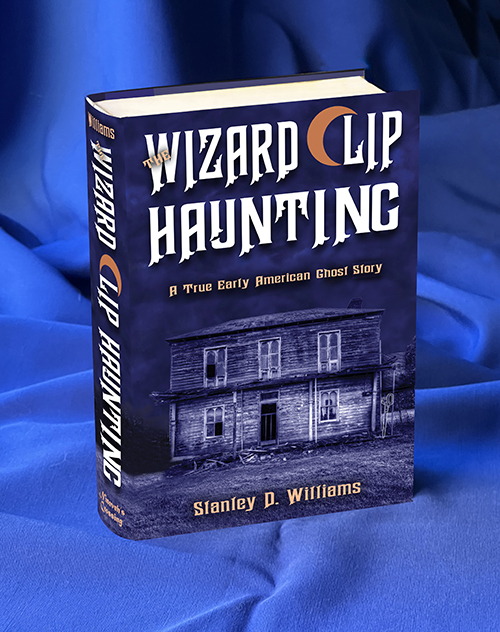
In October I traveled to West Virginia, Virginia, Maryland, and Pennsylvania on a book tour for my Wizard Clip Haunting novel. In numerous venues I presented a 25-40 minute stump talk about the book, which currently has 15, 5-star rankings on Amazon. I have compacted the talk down to a 13-minute video, granted without the obligatory reading of a scene from the book, which you can find separately HERE (Something's Happened to Mama). Without that 17 min incursion, below is the compacted stump talk (13 min in 15 social media bursts.) Here's a link to the book's website: https://wizardclip.stanwilliams.com
Stan Williams
Monday, January 8, 2024
Linguistic and Fallacy Analysis of Fiducia Supplicans on the Pastoral Meaning of Blessings
I wade into this with reluctance. I am not a theologian, but I am a good Catholic apologist and I am a strong defender of Catholic Church teachings. After reading many reports and a few debates on the controversy surrounding Fiducia Supplicans (authored not by Francis but by Victor Manuel Card. Fernández, Prefect; and Mons. Armando Matteo, Secretary for the Doctrinal Section, and yet approved by Francis), I had to read the document myself. In so doing, I was compelled to make some observations in cogency with my expertise.
Here's the introduction and Summary. The full document and my analysis is linked to a downloadable PDF.
-----------
DICASTERY FOR THE DOCTRINE OF THE FAITH
Declaration
Fiducia Supplicans
On the Pastoral Meaning of Blessings
by Stanley D. Williams, PhD
Revised: 9 January 2024
Introduction
Embedded in this document are my notes based on 20 years of doctoral level research and analysis of pubic communication messages that involve the identification of linguistic and logical fallacies used by cultural leaders that at times, either misrepresent their intent, or purposely misrepresent what is true. I do not annotate this document as a theologian, but as an expert in logical and linguist fallacies. I am also a student of classical Catholic doctrine, history, and spend a portion of my time involved with Catholic apologetics.
Executive Summary
This document is either very poorly written or poorly translated (into English). Although this declaration does not promulgate a Catholic doctrine and was not promulgated under the rubrics of an “ex cathedra” declaration and thus does not automatically fall under church indefectibility teaching, it does appear to promotes a heresy, perhaps unwittingly. Most notable the declaration utilizes a great deal of gaslighting that is to be repudiated. (Gaslighting is the purposeful or inadvertent use of irrelevant or invalid evidence that leads to a false conclusion. For example, the declaration gives examples of blessings that are non sequitur to the subject and purpose of the document, which is to discuss the blessings of same-sex or other irregular couples.) The declaration needs to be retracted.
The analysis is downloadable at this link.
Stan Williams
Monday, November 20, 2023
Thank you, Loretto and St. Francis University
![]() |
| The Water Bill Flyer |
One of my desired tour stops was the Allegheny mountain village of Loretto, PA, the town founded by Fr. Demetrius Augustine Gallitzin. For reasons covered elsewhere, it was Gallitzin who became the natural choice to narrate Wizard Clip Haunting.
I did speak in Loretto and I have a number of people to thank for that very rewarding evening.
To get an invite to Loretto to speak, I first contacted Fr. John Byrnes, the priest at the parish Gallitzin founded, St. Michael's Basilica. But the church hall and Gallitzin's historic chapel house were both under renovation. Fr. Byrnes (pronounced Burns) suggested I call the president of St. Francis University (SFU), Fr. Malachi Van Tassell. Fr. Malachi was very receptive to the idea and put me in touch with the Dean of the school's STEAM program, Dr. Peter Skoner. (It's not STEM, but STEAM. The A stands in for Arts and Humanities, thus SFU is a true liberal arts university.)
In turn, Dr. Skoner turned me over to the chair of the history department, Dr. Denise Damico, who was enthusiastic about my visit. We set a date and time, they provided a cottage on campus to stay in and meals for Pam and I, and then Samantha Gorman, Skoner's assistant, ordered eight copies of the novel...no doubt to give the faculty time to read the novel before I got there...just in case they wanted to head-me-off at the Allegheny Mountain pass.
![]() |
| Stan at Fr. Gallitzin's desk, at which (Chapter 1) Fr. Gallitzin narrates Stan's novel. |
After spending a few hours visiting classrooms, I gave an evening lecture. The turn out was the largest of the tour. About 100 town and university folks including a few students showed up. Not a few brought the novel they had purchased from Amazon and asked me to sign their copies. And, we started to sell books as soon as people arrived, even before the talk...first time that's happened. One family brought three Amazon purchased paperbacks (yes 812 pages each) and asked me to sign them. They were well into their books (all at once) and most impressive to me was their 10-year old daughter who was around page 300 and loving it. Okay, so she must have been a Catholic homeschooler...by and large such children are ahead of the curve.
| Fr. Gallitzin's crypt guarding St. Michael's Bascilica |
I can't take all the credit for the large turn out. For one thing the flyer is better worded and better looking than any of my ads. Second, it was sent to a captive audience that had to read it or have their water turned off. But, third, Pam and I discovered that there is nothing to do in Loretto at night unless you're a barn owl. There is no restaurant, (not even a McDonalds), no movie theaters, no shopping centers, no band shell, no gas station, no shuffle board court, no golf courses, no traffic light, no newspaper, and no police force. Although they do have a post office, some entertainment that is. Wait! There is an American Legion Hall, although I'm not sure what goes on there. The ONLY thing in town is the University, luckily (err, I mean Providentially) it's beautiful, big, and the food is great at the student union and cafeteria. So, when there's something happening at the University, people turn out. Fourth and finally, my public lecture was on a Monday night when there were no sporting events schedule.
Oh, but I forgot, there is the water bill inserts. They can be interesting.
| The author with Betty Seymour in her beautiful Victorian parlor. |
| St. Francis overlooking the Chapel at St. Francis University |
Monday, October 30, 2023
Harnessing Halloween Horror in Catholic-Themed Novel
Today on Beliefnet.com, John Kennedy reviews my Catholic-theme release, Wizard Clip Haunting: A True Early American Ghost Story
If the link is broken, here's the article:
Author Stanley D. Williamsharnesses Halloween horrorin Catholic-themed"Wizard Clip Haunting"
True terror? A filmmaker, author, and screenplay consultant, Stan D. Williams is known for his book The Moral Premise: Harnessing Virtue and Vice for Box Office Success defining a clear sense of morality as an essential ingredient in developing stories that will not only be financially successful but will stand the test of time. Should Wizard Clip Haunting, his new novel based on an actual early American ghostly legend be adapted to film, an opening around Halloween would seem appropriate.John W. Kennedy: I understand your novel is actually based on an actual legend. Can you tell me about it?
The novel chronicles the historic, tragic and adventurous lives of four characters. The first is the focus of our story, Adam Livingston, an innovative Pennsylvania flax farmer vexed from early childhood with vague premonitions of tragedies. Adam’s first wife, Esther, was a devout Presbyterian who cared for her family and used her talent at the loom to help clothe the poor. She believed their good but meager life was God’s blessing. But, although Adam deeply loved Esther, he was pretty sure any success they had was due to his hard work.
Woven into Livingston’s story is that of Denis Cahill, who dodges death in Ireland, becomes a renegade Capuchin priest, lives through the catastrophic New Orleans Fire of 1788, and after, sails past storms and pirates into the young United States in search of his calling, a destiny he could never have planned.
The third character, who historically has come to be known as the Wizard Clip, or the Clipping Wizard, is an impatient and murderous Babylonian spirit who is tasked with Livingston’s and Cahill’s downfall by edging them closer and closer to the gates of hell.
At the halfway mark in the book, what in Narrative Theory is called the Moment of Grace, a mysterious sojourner lodges at the Livingston’s home and in the middle of the night realizes he’s going to die. He asks his hosts to fetch a Catholic priest to hear his confession and give him last rites – but the Livingstons refuse, having promised themselves, in keeping with the times, that no Catholic priest would ever cross the threshold of their house. Before the stranger dies, he curses the Livingstons, their house and farm.
JWK: What drew you to this story?
SDW: I’m a professional story consultant and filmmaker. Since 2006 when my Hollywood story-structure book (The Moral Premise) was released, I’ve worked for writers and producers in the film industry – and a few novelists – helping their stories connect with audiences. On the side, I also produce and distribute Catholic apologetic media. In 2012 a Filipino man living in Australia, knowing my work, called me and pitched the Wizard Clip story to me as a film idea. I didn’t have the money to make the movie, so I wrote a screenplay. It got some interest in Los Angeles but no funding for the movie.
In 2014 I got curious about one of the character’s disposition after the exorcism, Fr. Denis Cahill. Research trips to New Orleans, Pittsburgh, West Virginia and Maryland convinced me that the story was not a movie but a novel, a long one. It had all the elements of a major Hollywood movie but it was deeply imbedded in American history and involved a number of historical characters from America’s founding. It was just too interesting to pass up.
SDW: I completely believe the hauntings were real for a number of well-documented reasons. Middleway, West Virginia today still celebrates the hauntings with badges on the front of the homes that existed at the time depicting the disturbances. The badges depict a pair of scissors, a crescent moon and a magician in a top hat that stands in for the clipping demon. The town is nicknamed “Clip.” There are thirty-some versions of the story from various perspectives with basically the same record of events; some are eye-witnesses.
Four Catholic priests investigated the events, including America’s first bishop, Rev. John Carroll…All the priests were initially skeptical. Fr. Demetrius Augustine Gallitzin was sent by Carroll to investigate. Gallitzin later wrote “After three months of investigation, I was soon converted to a full belief of them. No lawyer in a court of justice did more than I, nor procured more than your unworthy servant.”
And then there’s a existence today of Priest Field Pastoral Retreat Center which sits on the 35 acres of land given to the local Catholic society by the former agnostic Adam Livingston in appreciation for what Fr. Denis Cahill and Fr. Gallitzin did in ridding his property of the demon.
JWK: What’s the message you hope readers take from the story?
SDW: The main message behind the true story of the events is the authority of natural law in human relationships. Based on my book The Moral Premise, all success stories must deal with a conflict of values – a vice versus an opposing virtue – that is true to natural law principles. Thus, every character in Wizard Clip Haunting is challenged to acknowledge and live by the authority of Natural Law. Some do, some don’t. Natural consequences follow.
The story also underscores the validity of the Catholic priesthood, the Mass and the Sacraments – even when priests are not in a perfect state of grace.
Lastly, and perhaps most obviously, the original story and the novel underscore the reality of the demonic world with cautions to take evil seriously and project one’s life with truth.
JWK: Do you see a movie here?
JWK: Any ideas for casting or who you’d like to see direct?
SDW: I have not thought of casting. By the time this might get made potential actors would be too old and new actors would be on the market. I would direct, of course. LOL!
Wednesday, September 13, 2023
Roman Map of the Roman Empire 33 A.D..
https://www.stanwilliams.com/NINEVEHSCROSSING/BCInfo.php
On this map notice the extent of the main Roman roads connecting cities. Imperialistic as it was, Rome's grip on civilization allowed far-reaching and safe travel throughout the known Western world. This is the world of Christ and St. Paul. And it was on these relatively safe and far-reaching roads, protected by Roman legions, that the Gospel spread. From the Middle East and North Africa, to Spain, France, and England, mighty Rome on the banks of the Tiber held the known Western world in the grip of her power. Ruler of the Western world though she was, pagan Rome, in the 1st century, was already a victim of religious syncretism—a bewildering hodgepodge of unknown divinities and arbitrary religious practices- which spread throughout the empire. This of course, made the empire ripe for Christianity where God was known, up close, personal, and in the flesh.
#ChristianHistory #RomanHistory #Roman Empire #Jesus Christ #SpreadofChristianity #BasicChristianity #NinevehsCrossing.com #ChristianApologetics
Friday, July 14, 2023
The Surrender Novena is a Misnomer
Surrender to God and he will do everything for you.
It's bad theology.
I wish whoever writes these meditations, or repeats them, such as the Surrender Novena does, would explain to me how this line in any way, at any time, anywhere, makes any rational sense to the Christian.
Better still where is it in the Bible or the Catholic Catechism, or even the teachings of the Early Church Fathers?
If you take the words seriously, it embraces a worldview that rejects personal responsibility, and blames God for the individual's laziness. When you refuse to do what is reasonably expected of you and chaos results, you can blame God, for God didn't do it for you. The line means sit back, do nothing, and your Daddy in heaven will dress you, cloth you, and repair the roof on your house.
Of course that can't be want it means because Christian teaching and the Bible are full of warnings about being responsible, making good decisions, ad performing good works to back up your faith, and waiting patiently for God to change your mind or to bring it about through natural means, perhaps in years to come. There is an aspect of our will needing to align with God's will.
But "Surrender to God and he will do everything for you" sure sounds like the Protestant shibboleth "faith alone," which literally means "do nothing but just sit there and mentally believe that God is your servant and magic genie in a bottle."
Of course "faith aloneites" would distance themselves from such a stupid interpretation.
Isn't that what the words say?
What should they say?
Why don't they say what they should say?
Let's fix this.
Sunday, July 2, 2023
Dave Rubin & Frank Turek Breakthrough Dialogue on Atheism and Christianity
There are indications that society is waking up to transcendent truth. Dave Rubin, former comedian and politically conservative commentator, hosted Frank Turek, a most articulate Christian apologist, on his LOCALS podcast today. It was a breakthrough dialogue. If you don't know, Dave has changed from being a progressive liberal to staunch conservative over the course of this career. He's respected in politically conservative circles for his determination to engage people of all political walks in respective dialogue on controversial topics. He toured with Jordan Peterson during Jordan's first worldwide book tour for "12 Rules for Life." So, this conversation is fascinating to watch and listen to, especially since Dave is gay...although you wouldn't know it unless you heard him say so, which he rarely does. I suspect that when he hosts a Christian there's a prior agreement to steer clear of Dave's so-called "marriage" for the sake of civility. The consequence is a respectful dialogue about everything else—values, history, politics, culture, and religion—watched by many of his nearly 2 million YouTube subscribers.
Friday, June 30, 2023
My Motivations for Writing "The Wizard Clip Haunting" Novel
5. Motivations
My writing of The Wizard Clip Haunting was significantly motivated by what is generally unknown about the persecution of Catholics in England, Ireland, and how that persecution came to the British Colonies and became imbued into the culture of the United States. Let me review the history of the British contribution to the Protestant Reformation that has so imbued American culture to this day. A great deal of what I’m going to share is reflected in the novel as the prime motivation, not just for me the writer, but as the deep seated motivation for many of the Wizard Clip characters. My hope is that the novel will shed light on the origins of our culture and encourage us to avoid the prejudices of the past.
I grew up being taught that America was established as a safe haven for religiously persecuted Europeans; particularly which religious sects were being persecuted and by whom I was unsure. I did know that the Pilgrims and Puritans, for some reason, were at odds with The Church of England, but I didn’t know much more than that.
As a teenager in the 1960s in the Midwest, I recognized a strong bias against Catholics who lived in our suburban neighborhood. I didn’t understand this completely, except for what my mother inferred...that the Catholics were idolaters, not Christian. That my school chum next door was Catholic had something to do with it, in so far as he took after his Dad who drank a lot of beer, smoked packs of cigarettes, and swore a lot. It didn’t take much to persuade me that my mother was right.
Penal Laws - UK & Ireland
But it wasn’t until my college years that I became aware of the 17th and 18th century British penal laws, which outlawed all things Catholic, even to the point of imprisoning citizens, confiscating their land and possessions, animals, heritage rights, and executing priests who refused to be exiled. The penal laws also made celebrating the Catholic Mass and transubstantiation illegal. Other laws barred Catholics from voting, holding office, owning land, bringing religious items from Rome into Britain, and prohibited the publishing or selling of Catholic materials.
I had no idea about any of this. It surprised me. More research was clearly necessary.
The source of the penal laws was Henry VIII and his political and moral battle with the Vatican when Pope Clement VII refused to annul his marriage with Catherine of Aragon because, due to miscarriages and still births, she had not given him a male heir but only one daughter, Mary. In 1529 Henry banished Catherine from court, and persuaded his political fixers to arrange his marriage to Anne Boleyn, which they did.
The next year, in 1530, Henry took revenge on the Vatican. He convinced parliament to start work on a series of laws that would come to be known as the penal laws. Over the coming years they:
- Established Britain’s break from Catholicism
- Confiscated all Catholic property, land, monasteries, convents, and possessions
- Made Henry the head of the newly formed Church of England
- Outlawed Catholicism in English life, and
- Transferred significant wealth from the Catholic Church to the English Crown.
- After that, it was only natural for Pope Clement VII to excommunicate Henry, or we might say, Henry VIII excommunicated himself.
The penal laws were refined and expanded over the years, and eventually implemented in Ireland, which dramatically affected the life of several main characters in the novel. There were, however, attempts to mitigate the laws during the reigns of Catholic monarchs Mary Tudor (1553–1558) and James II (1685–1688).
In the early 17th century, certain British Catholics, although persecuted, were not idle. During the reign of Protestant James I, a group of Catholics tried to assassinate the king and the House of Lords in what is known as the Gunpowder Plot. On 5th of November 1605 the plot was foiled and several of the Catholic rebels were executed including the man guarding the explosives in the undercroft of the House of Lords. That man was Guy Fawkes. Thus, every November 5th in England, and even in the British colonies, groups of Protestants celebrated the foiling of the plot with Guy Fawkes Bonfires where they burn the Pope in effigy. During America’s Revolutionary War, General George Washington, recognizing the sacrifice many Catholics were giving to the war effort, tried to ban the celebrations, but he couldn’t change the culture.
The penal laws lasted roughly 250 years. With the Roman Relief Act of 1791 and others through 1926, the penal laws were finally, but not completely, nullified. In 2013, the British parliament passed the latest of these relief acts which allowed the spouse of the king or queen to be Catholic, but never the monarch, who must be Protestant.
A personal story illustrates the lasting effect this all has on culture today. In 20-03 I was traveling in England on business with an associate. We took a half-day off to tour Nottingham and St. Mary’s Church, which dates back to Saxon times. Recognizing us as American businessmen and tourists, we were being given a tour by the older but very gracious and considerate church sexton. He had just lifted the floor board near a pillar to show us the original Saxon rock foundation when my associated casually mentioned that we were both Catholic. Immediately, the sexton, raised up, glared at us, slammed the floorboard back into place, and stomped off. My associate turned to me and whispered, “Was it something I said?”
To this day, since America was initially British, the penal laws and their legacy are well ingrained into British and American culture.
Penal Laws - British Colonies & the United States
One of my favorite stories of this period is the Maryland experiment. In 1632 Lord Baltimore (George Calvert) was granted possession of all land lying between the Potomac River and the Chesapeake Bay. Lord Baltimore saw this as an opportunity to grant religious freedom to the Catholics who remained in Anglican England. Lord Baltimore died within weeks of his land grant, and so his first son, Cecil at age 26, took charge of forming the new colony, and sent his younger brother, Leonard at 25, to the New World to establish the Maryland colony with a small boatload of Protestants and Catholics, including a handful of Jesuit priests.
At fist laws were passed in the Maryland colony to give religious freedom to every one. But by doing so, the experiment didn’t last long. Soon, the population of Maryland became predominately Protestant and the Catholics were chased out of power, new laws were passed, and Catholics found themselves under penal laws once again, except they often were not enforced with severity. In 1692 the Episcopal church was established by law in Maryland. Acts were passed to prevent the growth of Popery. Priests could not say Mass, nor teach, nor perform any religious rite. Rewards were offered and imprisonment inflicted. One hundred pounds was the fine or sending a child abroad to be educated in the Catholic religion. Catholics refusing to take an oath against Catholicism forfeited their land. In 1734, Catholic worship was prohibited in Pennsylvania, and so on. Even after the Americans won the Revolutionary War, and the Constitution and Bill of Rights took effect there was still a crazy quilt of state laws regarding religion. In Massachusetts, only Christians were allowed to hold public office, and Catholics were allowed to do so only after renouncing papal authority.
In 1777, New York State’s constitution banned Catholics from public office (and would do so until 1806) and priests were still sought out and murdered by Protestant belligerents. In Maryland, Catholics had full civil rights, but Jews did not. Delaware required an oath affirming belief in the Trinity. Several states, including Massachusetts and South Carolina, had official, state-supported churches.
While some of America’s early leaders were models of tolerance, American attitudes of the general public were slow to change. The anti-Catholicism of America’s Calvinist past found new voice in the 19th century. The belief widely held and preached by some of the most prominent ministers in America was that Catholics would, if permitted, turn America over to the pope. Anti-Catholic venom was part of the typical American school day, along with Bible readings. In Massachusetts, a convent—coincidentally near the site of the Bunker Hill Monument—was burned to the ground in 1834 by an anti-Catholic mob incited by reports that young women were being abused in the convent school. In Philadelphia, the City of Brotherly Love, anti-Catholic sentiment, combined with the country’s anti-immigrant mood, fueled the Bible Riots of 1844 in which houses were torched, two Catholic churches destroyed, and at least 20 people were killed.
All this in spite of the Bill of Rights and the First Amendment of the Constitution which were ratified 53 years earlier in December 1791. Culture is often more powerful than laws.
Since researching and becoming Catholic myself in 1998, all of this information fascinated me. I wanted to somehow communicate how it was that Catholicism was trapped in a gulf of prejudice – which had originated with an egotistical and adulterous British king -- and had infiltrated the culture of Protestantism, in which I was raised.
In 2012, the Wizard Clip story was pitched to me as a movie idea, and I wrote a screenplay. I also began to research the background of the various characters—the real characters in the story—and I saw the depth of anti-Catholic bias and persecution that underscored and undergirded the Wizard Clip story.
In 2014 curiosity of some of the real characters motivated me to traveled to the Catholic archives in Baltimore, Maryland, and then trips to Middleway, West Virginia, Pittsburg, and New Orleans. Between a great many other projects, I poked away at the story’s plot and character back stories. Slowly, a large novel developed. Friends tried to persuade me to keep it short, but to tell the whole truth, and develop the characters so that the climax of the story made sense, I committed to telling a well-rounded and full story, being faithful to what I understood to be true, even if the gaps were imagined.