Wednesday, October 2, 2024

Evangelical-Protestant Misunderstandings about Catholicism


Let me call her TeAnn. 

She was raised as a Catholic, but poorly formed by Catholic Church and family. She was the wife of a deceased friend of mine and wrote to me about her take on the Catholic Church asking for a response. I responded in an attempt to correct the misunderstandings that all too often Protestants and Evangelicals level incorrectly at the Catholic Church. Here is an edited version of that exchange, having removed identifying information. Excerpts of her email are indented.

There are several books and DVDs at NinevehsCrossing.com that delve into this topic in more depth, e.g What Catholics Really Believe, Common Ground, and Why Be Catholic, 

(Stan Williams)

--------------------------------

Dear TeAnn:

Greetings in the name of our Lord Jesus Christ.

Although you revealed in your email that you were raised as a Catholic until age 21, it is clear that like thousands of others in the United States, you were badly catechized, for reasons unknown. The Catholic Church in the U.S. over the past generation did a horrible job of teaching its members the Christian faith. What you claim to know about Catholicism is significantly misunderstood.

You may recall that I grew up as an Evangelical Christian in a well educated and functional home. My parents were the children of pastors, missionaries, and at least one well-known martyr, stretching back hundreds of years. And as a teenager I memorized large portions of the Gospels and Romans during my years of Bible quizzing.

But chasing me through my young years, and well into adulthood, were the logical contradictions that Protestant-Evangelicalism presented to me. How I interpreted the Bible disagreed with what variety of Evangelical churches I attended taught, including the Lutheran Missouri Synod for which Pam and I were unofficial youth leaders in our early married life.

You may not know the story of why I finally left Evangelicalism (it had a lot to do with the church split where we both attended in the 1990s). I essentially gave up on Evangelicalism for its internal and Biblical contradictions. I started church hopping (again) for 2 1/2 years until, having run out of options, I walked into a Roman Catholic Church.

Pam and I wrote a book about the journey, filled with humorous stories. https://stanwilliams.com/NINEVEHSCROSSING/Order-GUC.php A Chinese reader in Beijing wrote of it: “Wicked humor, subversive satire, and brutal honesty.”

So, since then (1998) I have since become a part-time Catholic apologist (with dozens of TV program aired on Protestant and Catholic networks, along with many on-line articles, and a few books), Below, I offer an answer to your email (in-betweens) out of CLARITY and CHARITY. Please take my attempts to inform as such.

Hi Stan,
I recommend checking Abdu Murray's website, "Embrace the Truth" if you get a chance. This man is a "truth seeker" and eloquent speaker and has a Godly perspective which helps separate, clarify, and encourage understanding of Biblical Truth. Just to clarify....the Bible is my source of TRUTH. 2 Timothy 3:16 "All scripture is God breathed..."

For your reference, when Paul wrote Timothy (in SECOND Timothy) and remarked that "All Scripture is inspired by God and is useful for teaching, for refutation, for correction, and for training in righteousness...” it was an afterthought, for he wrote something else in FIRST Timothy as a foundation.

The FIRST thing Paul wrote to Timothy in 1 Timothy 3:15 (easy to remember references, both 3rd chapters and verses 15 & 16): "But if I should be delayed, you should know how to behave in the household of God, which is the church of the living God, the pillar and foundation of truth."

The significance of these two references is that Paul makes clear that the foundation of truth is the Church (1 Timothy), for only the Church can properly interpret the Scriptures mentioned in 2 Timothy. (But we’re not talking about just any “church.”)

Here is the context:

a. Paul’s reference to the Scriptures refers primarily to the Septuagint,
the Greek translation of the Old Testament, not the New Testament,
which had not yet been collected and authorized into a canon of texts
and proclaimed “inspired.” His reference to Scriptures could not have
included his letters, which he was in the midst of writing. It would be
centuries before his letters would be considered Scripture.

b. The NT collection of 27 books which we use today was being
written during the latter part of the first century (when Paul wrote
Timothy), and were being passed among the Christian Churches along
with many other texts that did not make the NT canonical cut. Some
churches considered writings such as the Gospel of Thomas, The
Didache, the Gospel of Mary, and others to be Scripture, but they were
not inspired. To decide which writings were trustworthy you need an
infallible authority led by the Holy Spirit.

c. So the Early Church took up the issue to decide what was inspired
or not. These decisions took hundreds of years after the texts were
written. Between the various churches a consensus was slowly
reached. The 27 books of the NT canon was first made official at the
Ecumenical Council of Nicaea in 325 AD. It was then that the council
(under the inspiration of the Holy Spirit) declared 73 books (46 OT,
and 27 NT) to be the Christian biblical cannon. The selection of these
73 books were later affirmed by three additional ecumenical councils
(Rome 382 AD , Synod of Hippo 393, Council of Carthage 525 AD.)
These were catholic (universal) councils before the Catholilc-Orthodox
East-West Schism that began with the iconoclast disagreements in
726 and became official in 1054.

d. Therefore, it was the Church (Catholic/Orthodox) that produced and
declared what writings were inspired. They did this under the infallible
guidance of the Holy Spirit, as prophesied by Jesus when he told the
Apostles: “When the Spirit of truth comes, he will guide you into all
truth.” (John 16:13), and “Whatever you bind on earth shall be found in
heaven..." (Matthew 16:19, and Matthew 18:18.)

e. Notice that Christ gave the authority to declare what is true
what Scriptures are trustworthyand what sins to forgive, et al... to
the Church in its official capacity. The Bible’s canon came out of the
Church; the Church did not come out of the Bible. The authority
structure is clear: Christ > the Apostles > the Church > Scriptures.

f. Finally, IF it was the Scriptures alone and individuals (like yourself)
to decide what is true by reading the Scriptures (the basis of all
Protestantism, thanks to Martin Luther)... the natural result are
thousands of different Christian denominations, all which declare the
others are wrong in their interpretation of the Scriptures. Luther’s Sola
Scriptura is destroyed by the fact that today the World Federation of
Lutherans is comprised over 100 Lutheran denominations who all
disagree with each other on how to interpret the Bible. If
Protestantism is right, that individuals can determine what is right and
wrong (based on the Scriptures), then the Holy Spirit is schizophrenic
and can’t make up its mind. But, what is really happening
is “relativism”...everyone can decided for themselves what is right.

g. On the other hand, the Catholic Church (officially and historically,
even if you do not remember being encouraged to do so) has always
encouraged studying the Scriptures and how the doctrines of the
Church came about from Sacred Tradition (such as the Bible is) and
General Revelation to all mankind. The result is that the various
official teachings and doctrines, as time to time declared by the
Catholic Church, have never contradicted what was declared earlier;
nor do they contradict with the historic understandings of Christ’s
teachings.

h. Finally, as St. Peter taught: "Knowing this first of all, that no
prophecy of Scripture is a matter of one's own interpretation." (1 Peter
1:20) i.e. Study the Scriptures so you understand the development of
doctrine over the centuries... but don’t start your own church because
you suddenly decide you know better than what Christ ordained
through his Church.

Stan, my responses below are not to argue, but to give you a perspective of my belief system, since you graciously shared yours.

BTW ....one of my favorite sayings is from Dennis Prager "Seek clarity above agreement" which relates to another of my favorite scriptures: Everyone should be quick to listen, slow to speak, and slow to become angry. (James 1:19)

The only doctrine I follow is the BIBLE.....my sole source of Truth. I do not believe that the Pope or My Pastor (sinful, fallible, humans chosen to shepherd the flock) are an authority on their own........

TeAnn, indeed, no pope and no pastor is an authority on their own. But the Catholic Church does not rely on one person. The pope’s job is not to decided on doctrine on his own (in fact, he can’t. He does not have that authority). HIs job is to protect and enforce what has historically been taught.

The truth according to the Bible is my authority, and my pastor is quick to remind us not to necessarily believe all that he teaches us, but to read the scriptures for ourselves to receive revelation from the Lord and confirm what he has taught through the Word.

This instruction from your pastor is what has split the church thousands of times, as individuals decide their pastor or teacher is wrong and start their own church. The independent evangelical church we attended together for years went through that, remember?

I think I have a pretty good understanding of the Scriptures........I have studied the Bible intensely since the 1980's (over 18 years on & off) through Bible Study Fellowship International (BSF) which is a non-denominational Bible study completely focused on the Word of God. Not to mention many, many other studies with multiple small groups I have led. I do agree with your statement that the Holy Spirit is not schizophrenic.......and I wish that we had more unity as Christians. There are many false manmade doctrines but one thing that never changes is the Bible....the true Word of God, our AUTHORITY as Christians.

While the Bible has not changed, the INTERPRETERS and the INTERPRETATIONS have. We can start with Luther, Calvin, Zwingli (none of those Reformers could stand each other’s doctrines), and thousands of others. They are all using the SAME Bible but coming to different understandings. Jesus prayed in John 17 that his followers would be one so that “the world would know that you (God the Father) sent me.” But since we are not one Church the world does not believe that Jesus was sent by God. The Protestant scandal persists.

I believe you when you say that the Pope was misquoted or represented wrongly.....so many people in the media that it happens to.....but to say that all religions lead to heaven...I believe MUST be corrected as soon as possible.....that is simply NOT BIBLICAL and WRONG. One of many examples: John 14:6 "I am the way, and the truth, and the life. NO one comes to the Father except through me"

I don’t always agree with Pope Francis. But he DID NOT say that all religions lead to heaven. Since he did not say that, he does not need to be corrected. The next day the Vatican did issue a statement that corrected the interpreter and the journalists’ reports. That social media posters and others don’t pick up on the correction is not Francis’ or the Vatican’s responsibility.

This is a perfect example of wrong interpretations, isn’t it?

I'm afraid we will have to agree to disagree on the Catholic perspective. I was born and raised Catholic and changed to a Bible based church because of all the "man made doctrine" in Catholicism.

Name one “man-made doctrine” in Catholicism.” (You attempt to
below.) What you think was a “man-made doctrine” is actually a misinterpretation ... or the result of ignorance by who told you there were such things. I have been a Bible student all my life and I came to the Catholic Church because its teachings agreed with the Bible better than any other Protestant or Evangelical denomination. I have an open challenge to anyone at any time. Such man-made things simply do not exist. As Bishop Fulton Sheen famously said, “There are not one hundred people in the United States who hate the Catholic Church, but there are millions who hate what they wrongly perceive the Catholic Church to be.”

My Pastor follows the Bible to a tee and I LOVE his teaching. I attended Catholic church from birth to 21 years old and never received teaching like it and was never encouraged to read or study the Bible as a Catholic.

The Church has always encouraged people to study the Bible. It was the Church that first translated the Latin, Greek and Hebrew into the vernacular so people could read it, once the Printing Press was up and running. The fist book to come off Gutenberg’s press with the Church’s encouragement was the Bible. That you didn’t pick up on that in Mass is amazing, insofar as the entire Mass is 90% Scripture. The first half is pure Scripture readings from the OT, Psalm, Epistle, and finally the Gospel. The homily is the priest’s explanation of the readings. The first vernacular Catholic Bible was the Douay Old Testament in 1582.

This idea that all you need is the Bible to know the truth makes a mockery of history. Yes, there was a canonically approved collection of writings by the 4th and 5th centuries. (What did Christians do before that?) But after the councils approval of a canon, the only (hand made) copies of the (very expensive) Bibles were in under lock and chain in Church buildings, and with a few scholars and the very wealthy. The printing press which made books available to the common person didn’t appear on the scene until 1455, and still it took 3 years to print a copy of the Bible. It would be 100 years for books to become widely available. So, for 1500 years how is it possible for the common man have a copy of the Bible and practice Sola Scriptura? In 1521 Luther no doubt had a copy of the Bible (in Latin) and then he translated it into German. But the printed Bible did not become widely available until the industrial revolution and the advent of steam-powered printing presses. So, this idea that it’s the Bible and Me that determines Biblical truth was impossible to execute for the first 1700 years of Christianity. The text and the interpretation still had to come from “a” church, NOT the individual with a Bible.

I disagree with a lot of the Catholic practices including not allowing priests to marry which I believe has led to perversion and even the Pope condoning homosexuality.

This shows what you don’t know about the Catholic Church.

First, the pope does not condone homosexuality. He has condemned the practice many times. What he does do is encourage Christians to show kindness to sinners, which includes homosexuals. There has been a homosexual scandal (and other sexual scandals) in the Church. But then that is true of all religions. My first exposure to sexual scandals was in Evangelicalism. The secular press, many anarchists, and even some bishops and priests have long encouraged the Catholic Church to embrace homosexuality, but it has not... although many other non-Catholic faiths have, like Anglicanism, Methodists, and some sects of Presbyterianism, and Lutheranism.

Second, there are 23 rites that are in fellowship with the Roman Catholic Church and the pope. All of these rites agree completely with the dogma and doctrines of the Roman Catholic Church. Some of these rites are Byzantine, Alexandrian, Syriac, Armenian, Maronite, and Chaldean. 22 such rites are within the Archdiocese of Detroit. The Roman rite is the only one I know what seeks celebrate and unmarried priests. I think, but I’m not sure that all the others can marry, You are right that it is a PRACTICE and not a doctrine or teaching. Big difference. But there are hundreds of Roman Catholic priests in America and England that are married and are in good standing with Rome. My friend Fr. Dwight Longenecker (Greenville, SC) is one of them. He has three children is still married, and pastors a growing church. (https://olr.church/) Many of these priests (like Fr. Dwight) came into Roman Catholicism from Anglicanism when Anglicanism when doctrinally corrupt.

Jesus recommended celibacy as a spiritual discipline ("for the sake of the kingdom of heaven") to those who could accept it. I also believe that Mary, the mother of Jesus, was chosen by God as the virgin to bear Jesus, but was not sinless.

This is where your interpretation of Scripture disagrees with 2,000 years of doctrine and all of the Early Church Fathers. You can collect Scriptures to argue effectively to the contrary that Mary was a sinner like anyone else, but you won’t convince St. Augustine, or St. Ignatius our hundreds of others who where discipled by the Apostles. At the same time the church teaches that Mary had a savor...her son. The analogy often used is that before Mary stumbled and fell into a mud puddle of sin, Jesus reached out and kept her from falling. It’s about interpretation, not what you think. Again, see 2 Peter 1:20

She was human (and therefore a sinner) and many of my Catholic friends and relatives pray to her and other saints which is not biblical.

Here you are equivocating on the word “pray.” To your understanding, and clearly you didn’t get this from your poor Catholic upbringing, “to pray” means “to worship.” But that is not the classical definition of “to pray.” “To pray” means simply “to ask.” In a British court a lawyer will “pray to the court...” in order to “request” something. When I ask you to pray for me to Jesus, I’m actually “praying” to you, and asking you to request something on my behalf. Catholics do not worship anyone but the persons of the Holy Trinity. They do not worship saints, nor Mary, nor anyone else. But the saints are in heaven before the throne of God, and have access to pray to Jesus on your behalf. (c.f. Revelations 8:3-4 where the saints pray before God)

Jesus was the only "sinless" human. Jesus modeled how we are to pray and although I still have my rosary, because my grandma McMenemy was never without it and taught me the importance of prayer.....I do not believe in repetitive prayers as rebuked in scripture: Matthew 6:7-8 "But when ye pray, use not vain repetitions"...

Clearly, you were taught wrong about the Rosary. Or maybe you were taught right as a child, but were later corrupted by Protestant heresies. Here’s how I pray the Rosary, none of it is “in vain.”

a. The focus of the Rosary prayers are not what is said (the Hail Mary, etc.) but what is contemplated...the mysteries of Christ’s life through the eyes and life of Mary. The verbal repetitions are a pacing device to ensure we are in prayerful contemplation for a set amount of time before moving on to the next mystery.

b. I pray the Rosary everyday. So does Pam. When I pray it I contemplate (in my mind) on the life of Christ and what can be learned by being with Christ and Mary at the foot of the cross, or at the wedding in Canaan, etc. Or, based on which one of the mysteries I’m on (there are four groups of mysteries, 20 in all), I pray for things in the world associated with the mystery. Each mystery is associated with a fruit of the spirit or a virtue. Humility is associated with the mystery of Christ’s nativity, and how that was a very humble event for the King of the universe to be born in a stable. So we are to learn humility by being there (mentally) and contemplate how to apply that experience in our daily life.

c. And yes, sometimes, I concentrate on the Hail Mary and the meaning of those words which came from the lips of Elizabeth when Mary greeted her and John the Baptist leap in Elizabeth’s womb. Imagine being Elizabeth and the Holy Spirit reveals to you suddenly who Mary is...the Mother of God and she’s come to visit and help you. That is so incredible to me, that Mary would come to me to help Elizabeth in her late pregnancy. "And Elizabeth filled with the Holy Spirit, said to Mary in a loud voice “Blessed are you among women, and blessed is the fruit of your womb. And why is this granted to me that the mother of my Lord should come to me....” Luke 1:39ff ... and then Mary’s words, “My soul magnifies the Lord...from now on all generations will call be blessed...for he who is mighty has done great things for me....” Wow. I just can’t get over that scene and its meaning for all time. It is the crux of all history. That is what I contemplate often when on the glorious mysteries of the Rosary.

d. Thus, when we pray the Rosary we are praying Scripture...which is beneficial for “training righteousness," etc.

e. Finally, my repetition of the Hail Mary, and the other prayers associated with the Rosary (like the Our Father) HAVE. NEVER. BEEN. IN VAIN. I can easily say the Hail, Mary 50 times in a row, and think about them, and be taken up in worship of God because they are the words of the Angel Gabriel, announcing the incarnation of God. THE INCARNATION. The most important moment in the history of all mankind. Never is contemplating the incarnation in vain.

I also, according to the Bible, can tell my sins directly to God and ask for forgiveness, no mediator, other than Christ my savior, necessary.

Yes, you can do that. But Scripture tells us that the normal way is to go to a priest. Why? Because it is harder, and it requires accountability with another person, who just happens to be in the person of Christ. The priest, is persona Christi, a Latin phrase in Catholicism, Anglicanism, and Lutheranism, that means the priest acts in the presence of the risen Christ. Where is this in Scripture. Several places. Here’s one passage from the NIV (an Evangelical translation) Jesus is speaking to his Apostles: “If you forgive anyone’s sins, their sins are forgiven; if you do not forgive them, they are not forgiven.” John 20:23 The context is not between just any two persons.

And yes, it is only God that forgives sins, but remember the ordained priest is an ordained representative of God in direct success of the Apostles and Christ. In the Confessional the priest, in pronouncing absolution says, “I absolve you from all your sins in the name of the Father, and of the Son, and of the Holy Spirit. Amen.” Thus, it is God that forgives sins, though the sacrament effected by the priest and the contrite penitent.

Do not be confused. When we talk about a mediator, we are talking about a mediator between us and God the Father. The mediator is always Jesus Christ. The priest does not replace Jesus, but acts officially in space and time as Jesus...at Jesus’ command. (c.f. John 20:23, Matt. 16:19)

Another practice that I consider ridiculous is an "annulment of marriage" for however many thousands of dollars it is now. No human has the authority to "ANNUL" a marriage as if it did not exist (and what about the children of that union). GOD,JESUS, and the HOLY SPIRIT (Trinity) is the only AUTHORITY as far as the Bible teaches and I believe this truth. These are only some of the Catholic doctrines that I disagree with based on the authority of the Bible.

Again, you misunderstand what “annulment of marriage” is and why it is necessary.

a. The Catholic Church takes marriage very seriously. IT IS A SACRAMENT parallel in importance with a priest’s ordination. Marriage and Ordination are both sacraments of one’s VOCATION. The Church protects people by ensuring they are hearing God correctly about what vocation they should pursue as a result of God’s calling on their life. The decision is sacred.

b. Annulment is not divorce. The concept of “divorce” does not exist in Catholicism. Once a couple is sacramentally (validly in the eyes of the Church and God) married, there is no going back until the death of one of the spouses. The church’s authority here, as in many other things, is based on Christ’s words to Peter and the Apostles about the Church’s requirement to bind and loose. “I will give you the keys to the kingdom of heaven. Whatever you bind on earth shall be bound in heaven; and whatever you loose on earth shall be loosed in heaven.” (Matthew 16:19) Here’s another verse“If you forgive anyone’s sins, their sins are forgiven; if you do not forgive them, they are not forgiven.” (John 20:23)

c. Annulment simply means the marriage was never valid in the first place. But determining (legally) can take time and some investigation usually with multiple interviews and the work of a psychologist. Consider the terms of a valid marriage (sacramentally in the eyes of the church).

(1) Both spouses must be baptized.
(2) Both spouses must be free to marry and have no prior marriages. (3) Both spouses must be of the age of consent (typically 18).
(4) Spouses must be of the opposite sex.
(5) Both spouses must be given freely to the consent of the marriage and not coerced, which means neither spouse is open to divorce at the time of marriage. There must be a firm, life-long commitment.
(6 et al) And there are a few others, like the marriage must be consummated with sexual intercourse freely given to by each spouse.

NOW, if any of these are not true then, under canon law, the marriage was never sacramental, and was invalid, and never occurred. Thus an arranged marriage where the woman is forced to marry the man....is an automatically invalid, and easily annulled.

d. Again, your reference that only the persons of the Trinity have the authority to annual a marriage is interesting. Since the persons of the Trinity do not physically appear on earth. and since you are allowing the possibility that the marriage can be annulled if the Trinity so wishes or declares it...who therefore can stand in for God, Jesus, or the Holy Spirit?

e. You can disagree, of course, but since you put a lot of faith in the Bible Alone (a doctrine that does not exist in the Bible) here is where the final authority lies. Note it is NOT in the Bible, but in the leaders of the church given their inspiration by the Holy Spirit. Again, Jesus says to Peter “I will give you the keys to the kingdom of heaven. Whatever you bind on earth shall be bound in heaven; and whatever you loose on earth shall be loosed in heaven.” (Matthew 16:19)

SIDEBAR
Can humans (men of the Church) be inspired by the Holy Spirit to make such decisions? Of course, just as the Holy Spirit inspired the human authors to write the Scriptures, and select which ones should be canonically included in the Bible as inspired.

f. In many diocese (e.g. Detroit) the annulment of marriage costs nothing, although it may be thousands of dollars in places...but for good reason.

The bottom line is that the authority to determine Christian doctrine does not lie in a personal interpretation of the Bible, but in the Church’s infallible interpretation of the Bible and the Sacred Tradition that preceded the Bible.

Bottom line, is we as Christians, regardless of our manmade denominations, are unified through our salvation in Christ....."For God so loved the world, that he gave his only Son, that who ever believes in him should not perish but have eternal life." And one thing I love about BSF is that they always encourage us to focus on what unites us rather than divides us.....Jesus Christ our savior!

Okay, that sounds good, so let’s do what Jesus said and avoid a wrongly understood saying of Jesus, which leads to a divided Church. Such divisions occurred at the time of Christ because his followers misinterpreted what he said. Here’s an explicit example from the Gospels.

In the last half of John 6 Christ taught about The Eucharist, something that does not exist in Evangelicalism. Jesus tells his disciples over 20 times (explicitly and implicitly) “Amen, amen, I say to you, unless you eat the flesh of the Son of Man and drink his blood you do not have life within you.” Then in verse 6:60 and 66 John writes, “Then many of his disciples who were listening said, “This saying is hard; who can accept it?” ... As a result of this, many of his disciples returned to the former way of life and no longer accompanied him.”

Were you ever baptized and confirmed in the Catholic Church? If so it’s time to come home.

stan 


Interior of the Sagrada Familia Cathedral, Barcelona, Spain by Antoni Gaudi


Thursday, September 26, 2024

ANGEL QUEST: In Search of St. Michael's Sword

In 2021, Fr. Dwight Longenecker introduced me (Stan Williams) to the St. Michael monastery alignment known as St. Michael's Sword. Together we planned to travel with a film crew and investigate the St. Michael monasteries that were perfectly aligned across Europe and into Israel. 

In 2022 as the fake COVID-19 pandemic was winding down, I took some digital video gear and went on a pilgrimage to scout the seven monasteries and a few other sites in preparation for the pilgrimage with the film crew and Fr. Dwight. But we never got our funding.

In 2023 and early 2024 I began to put together a documentary of St. Michael's Sword with the material I had recorded during my scouting expedition. I released the finished product May 18, 2024 on YouTube, Vimeo, and Rumble. You can watch it for free. CLICK on the poster for more information and viewing links.

Here's a summary:

Stretching 2,600 miles across Europe to Israel is a straight line of ancient monasteries all dedicated or closely related to St. Michael the Archangel. The alignment has come to be known as the Sword of St. Michael. Although some of the monasteries were built as far back as the 5th century, only recently has this unique alignment been discovered. Archaeologists wonder how and why the monasteries came to be built in a perfectly straight line, as well as in extremely inaccessible locations on isolated islands and on the side of mountains. Although seemingly built by a diverse collection of monks and friars with little knowledge of each other, the constructed edifices share similar stories of how St. Michael showed up in times of great need. 

In the full-length, two-hour documentary, Dr. Stan Williams, filmmaker, historian, and author, takes us along on his pilgrimage to each of the monasteries and a few other historic places along the way, including interviews with local archeologists and historians. Stan's friend, Fr. Dwight Longenecker, Catholic priest, world traveler, and prolific author who introduced Stan to the St. Michael alignment, adds noteworthy comments and insights throughout this inspiring program suitable for all audiences.

Here are early comments from viewers on YouTube:
I have wanted to do this pilgrimage for awhile. Thank yo for taking me on your journey. "Who is like unto God?"....No one. As a solider in Christ, I salute the Prince of the heavenly army and lift up the sword of the Spirit. O Glorious Sword given to  Michael the Archangel, by the Eternal Father of the celestial realm....  (@daisyd2392)

What an excellent documentary! 💜 I'm currently doing St. Michael's Lent and this really inspired me to do such a pilgrimage! I really appreciate the real life traveling struggles! You never see this side of things on a Rick Steves travel program! 😆 Forwarding this to everyone I know! 😊 (@Diamondkiwi14)

A highly informative documentary worth watching! It inspires and motivates to start the pilgrimage along Saint Michel's Line. I am honored I could take part in it.  (@joannapyrgies)  [Joanna is featured in the documentary sharing her archaeological expertise. I interviewed her in Dublin. Thank you Joanna, your world travels and knowledge added much to the project. S.W.]

I have always dreamed of doing this pilgrimage. Wish I could have gone with you. That the Star of the Sea shines at the tip of St. Michael's sword is no coincidence or imprudence to me. It only points out that St. Michael points us to Mary, Queen of angels and saints and the ultimate conqueress of demons through her son, Jesus—flesh of her flesh and blood of her blood; and The Word was made flesh, and dwelt among us. Amen. 🙏 (@ConstellationOrion1) [That's a good point of how St. Michael points to Mary...wish I could have included that point in my narration. S.W.]

Amazing! (@timmcclain2519)

Thank you for this ... Get with a travel agent and put this one together !!!! (@stormyoutdoors4845)

🙏🙏🙏 (STAR)  (@Undermarysmantleforever)

Please consider adding chapter markers to divide the episodes. This would be very helpful.  Thank you! @KristynLorraine  [Thank you for this suggestion. I wanted to do this but didn't now how, but now I do and I'll do it. DONE. S.W.]


Monday, June 17, 2024

Remembering Al Kresta (1951–2024)

Added June 22, 2024: Just returned from Al's Funeral Mass that was wonderfully live streamed with multiple cameras and sound fidelity. A treat worship experience. Watch it here: https://www.youtube.com/watch?v=_kw1NCwTsR0

by Stan Williams - June 17, 2024

Al Kresta was a good friend. I knew him long before he returned to Catholicism. He was a store-front pastor near our home in Dearborn Hts., MI. Later, Al managed Len Iden's Logos Bible Bookstore in Taylor, Michigan that I frequented. 

At one point I became frustrated with broadcast television and game Al and his family our Sony Trinitron color television (that was ironic insofar as I became a television and film producer, although I steered clear of broadcast fare). Al and I joked that I had introduced his family to the the corruption of culture with that move.

Years later, he reverted to the Catholic Church, left WMUZ (Detroit Evangelical Christian radio) as their afternoon talk show host, and founded WDEO (Ave Maria Radio) with help from pizza baron Tom Monaghan at Tom's Ann Arbor headquarters, the mammoth Frank Lloyd Wright office building at Domino Farms at M-23 & M-14. 

When Pam and I converted to Catholicism from our Evangelical roots, I found myself occasionally as a guest on his afternoon talk show "Kresta in the Afternoon," talking about one of my many media projects. I was saddened when I heard he was battling cancer, Al and his family had been through so much. 

This past Friday, June 14,  2024, I was at Al's Church (Christ the King, Ann Arbor, MI) for the funeral Mass of another WDEO regular, Henry Root, who had died of old age. Henry was the Operations Mgr at WDEO for years and the host of Fr. John Riccardo's show "Christ is the Answer" heard around the world on EWTN Radio. Fr. John celebrated Henry's Mass. But I noticed that Fr. Ed Fide (Christ the King's pastor) was missing from the service, and good friend, Mike Jones, who sat behind me at Mass, exited very quickly afterwards. We usually touched base with each other when in the same service, but not Friday. 


Then early the next day we received one of many emails that Al had received his new leg in heaven.  My lasting memory for me of Al was that he wrote the Foreword to my faith memoir, "Growing Up Christian: Searching for a Reasonable Faith in the Heartland of America" in which I document the many times (some humorous) God called me into the Catholic Church. Pam played a big part in that story, and she continually interrupts me in the book to set the record straight. But Al was there from the start as he so aptly did in my book. I'm eternally grateful, Al. See you later.

There are several good write-ups of Al's reversion story from his LSD days to Catholic national prominence. Below is the CNA/EWTN (official) obituary which is relatively short and tells a good story. Also, here is a link to Dave Armstrong's interview originally conducted years ago but then updated.  Why I Returned to the Catholic Church.  Al, Dave Armstrong, Gary Michuta, Bobby Hensley, Steve Ray, myself, and a dozen others including priests in the area were all involved in Catholic apologetics and evangelism. Gary and Chris Michuta would have a summer picnic where we'd all show up and share stories. Perhaps we'll continue the tradition in heaven someday.

Al Kresta, longtime Catholic radio host, dies at 72

By Jonah McKeown
CNA Staff, Jun 15, 2024 / 14:35 pm
Al Kresta, a longtime Catholic radio host, author, and founder and president of Ave Maria Radio, died Saturday at his Michigan home after a battle with liver cancer. He was 72. 
A former evangelical Protestant who rose to prominence as a radio host before his conversion to Catholicism in 1992, Kresta’s voice was heard on hundreds of radio stations daily, including EWTN Catholic Radio, via Ave Maria’s flagship program, “Kresta in the Afternoon.” 
According to a webpage set up by Kresta’s family to provide updates, Kresta was admitted to the University of Michigan Hospital on April 29 “after a month of tests,” which culminated in a liver cancer diagnosis on May 3. 
Born in 1951 in New England and raised Catholic, Kresta’s road back to the faith of his baptism was winding. Despite his upbringing, he described himself as a “stereotypical 1960s kid” who as a young man leaned into the worldly desires of “drugs, sex, and rock ’n’ roll.” The Catholic Church “didn’t hold much appeal to me,” he told EWTN’s “The Journey Home” in 2004. 
“I was a musician and I wanted to pursue my music and a hedonistic, self-centered lifestyle,” he told the National Catholic Register in a 2000 interview. 
“In 1969 I left home and became homeless by choice. I lived on the street, slept in vacant apartments, stayed on the beach in the Florida Keys and bummed off of friends. After some hallucinogenic LSD experiences, I hitchhiked along the eastern seaboard looking for someone who could help me make sense of my hallucinations. I ended up in a New Age group.”
Later, though, through “a series of remarkable, providential occurrences,” Kresta said he became convinced that the New Age movement’s depiction of Jesus as a hippie guru was not correct. In 1974, as a student at Michigan State University, he embraced evangelical Protestantism, in large part thanks to the writings of C.S. Lewis. He leaned into his newfound faith, eventually opening a Christian bookstore and even pastoring a nondenominational church for five years. 
As a pastor, Kresta said he was sometimes tripped up by the fact that there were authoritative questions he had to answer about the Christian faith and that he realized that “the Bible alone couldn’t settle these matters.”
“I had no authority,” he admitted in a later, 2007 “Journey Home” interview.
In the early 1990s, Kresta hosted a Catholic priest on his evangelical-focused radio program as part of an episode dedicated to “Catholic answers to Catholic questions.” Kresta said he was so moved by the priest’s answers that it hit him like a ton of bricks: “My God, I’m a Catholic.” In 1992, he repented and returned to his Catholic faith; his entire family converted at the same time. 
Kresta would later say that the “intellectual integrity of the Catholic faith is unlike anything in Protestantism.”
“The Catholic faith has never disappointed me when it comes to my use of reason or intellectual coherence,” he said. 

Colleagues remember Kresta as ‘deeply thoughtful’ and ‘courageous’

EWTN President and Chief Operating Officer Doug Keck on Saturday said that Kresta’s passing was “a titanic loss not only for EWTN and Ave Maria Catholic Radio but for the entire Church." 
“As his show intro said, he always had the Bible in one hand and a copy of the New York Times in another,” Keck said. 
“He was fearless in his willingness to take on tough issues both inside and outside the Church!” he continued. “But always with a wisdom-driven, balanced approach designed to meet the listeners where they are but never leave them there.” 
“He was an inspiring figure who overcame incredible physical roadblocks to serve his God, his family, and his Church.”
Teresa Tomeo, the host of the radio show “Catholic Connection,” said she would “always remember meeting [Al] long before I started in Catholic radio.”  
“I was so impressed with his knowledge of Scripture and the faith as well as his early and courageous pro-life work,” she told CNA. “We lost a warrior on so many fronts. These are tough times but we continue the work in his honor and memory.”
Scott Hahn, meanwhile — a renowned biblical scholar, author, convert, and founder of the St. Paul Center for Biblical Theology — called Kresta “one of the most deeply thoughtful and thoroughly converted men I’ve had the privilege of knowing — and calling a good friend.” 
“He will be greatly missed by many,” Hahn said. “Requiescat in pace.”
Matthew Bunson, vice president and editorial director of EWTN News, told CNA on Saturday: “Aside from his goodness, his greatness as a father, husband, and friend, his passing will be a massive loss to the Catholic cause.” 
“He was one of the keenest observers in the Church of contemporary culture and the ecclesiastical landscape,” Bunson said. “We are intellectually poorer for his passing but even more we have lost a truly prayerful, gentle, and faithful disciple of Christ.”  
Rob Corzine, the vice president of academic programs at the St. Paul Center, told CNA that he first became acquainted with Kresta through the radio host’s “bridge group.”“It was a room filled with about equal numbers of Protestants and Catholics who wanted to hear him explain basic Catholic doctrines once a week throughout Lent,” Corzine said.
“Al had the gift of hearing your real question, however poorly you put it or even understood it yourself, and answering that.”
At the time of meeting Kresta, Corzine was “an evangelical who had been reading my way toward the Church for the last few years.” Shortly after, Corzine was coming into full communion with the Church; in several more months Kresta was showing him the ropes of Catholic radio.
“Al is one of the many people to whom I owe an incalculable debt of gratitude,” Corzine said. “And I am only one of the thousands of whom that is true.”

Helped launch Ave Maria Communications 

In 1997, Tom Monaghan — the founder of Domino’s Pizza and also Ave Maria University in Florida — called Kresta and asked if he wanted to move to Ann Arbor to help create Ave Maria Communications. Monaghan “funded the media enterprise for years,” Kresta said in a 2013 Catholic World Report (CWR) interview. Ave Maria later became a major affiliate of EWTN (which also owns Catholic News Agency).
“There’s absolutely no doubt that Catholic radio’s principal mission has been catechesis,” Kresta told CWR.
“I think in the next generation of Catholic radio that’s going to become increasingly clear. Because the last generation was spent defending the faith and defending papal infallibility … We’ll continue to defend magisterial teaching, but I think we now have to help people distinguish [between what] we owe religious assent and what are prudential judgments.” 
In 2003, Kresta suffered with and survived a serious bout of necrotizing fasciitis, a rare bacterial infection. It resulted in the loss of one leg, necessitating the use of a wheelchair.
Kresta said a year or so after the illness on “The Journey Home” that the experience helped him to learn that even in the midst of terrible suffering, “you can think on the cross of Jesus, and you can offer up that suffering.”
His Catholic faith helped him, he said, to “enter more deeply into a sense of Christ’s sufferings … through being buffeted by pain, your sense of self is firmed up and strengthened, moment by moment there’s a stronger sense of who I am before God ... Christ living in me.”
“The Catholic Church’s teaching on suffering got me through arguably what was the most severe crisis I’ve had in my life ... it was my leg, or my life. So, it was my leg. Which was a very easy decision all things considered,” he said with a laugh. 
Kresta is survived by his wife of nearly five decades, Sally, as well as his five children and many grandchildren.

Monday, January 29, 2024

Compaction of Wizard Clip Haunting Stump Talk

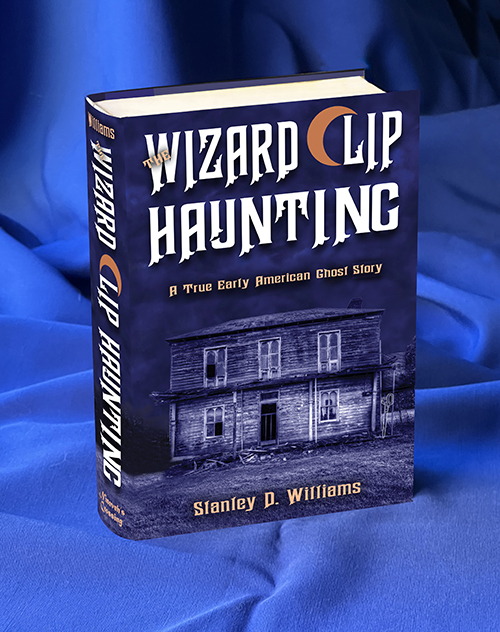
In October I traveled to West Virginia, Virginia, Maryland, and Pennsylvania on a book tour for my Wizard Clip Haunting novel. In numerous venues I presented a 25-40 minute stump talk about the book, which currently has 15, 5-star rankings on Amazon. I have compacted the talk down to a 13-minute video, granted without the obligatory reading of a scene from the book, which you can find separately HERE (Something's Happened to Mama).  Without that 17 min incursion, below is the compacted stump talk (13 min in 15 social media bursts.) Here's a link to the book's website: https://wizardclip.stanwilliams.com

Stan Williams


Monday, January 8, 2024

Linguistic and Fallacy Analysis of Fiducia Supplicans on the Pastoral Meaning of Blessings

I wade into this with reluctance. I am not a theologian, but I am a good Catholic apologist and I am a strong defender of Catholic Church teachings. After reading many reports and a few debates on the controversy surrounding Fiducia Supplicans (authored not by Francis but by Victor Manuel Card. Fernández, Prefect; and Mons. Armando Matteo, Secretary for the Doctrinal Section, and yet approved by Francis), I had to read the document myself. In so doing, I was compelled to make some observations in cogency with my expertise. 

Here's the introduction and Summary. The full document and my analysis is linked to a downloadable PDF.

-----------


DICASTERY FOR THE DOCTRINE OF THE FAITH

Declaration

Fiducia Supplicans

On the Pastoral Meaning of Blessings


by Stanley D. Williams, PhD


Revised: 9 January 2024


Introduction

Embedded in this document are my notes based on 20 years of doctoral level research and analysis of pubic communication messages that involve the identification of linguistic and logical fallacies used by cultural leaders that at times, either misrepresent their intent, or purposely misrepresent what is true. I do not annotate this document as a theologian, but as an expert in logical and linguist fallacies. I am also a student of classical Catholic doctrine, history, and spend a portion of my time involved with Catholic apologetics.  

Executive Summary


This document is either very poorly written or poorly translated (into English). Although this declaration does not promulgate a Catholic doctrine and was not promulgated under the rubrics of an “ex cathedra” declaration and thus does not automatically fall under church indefectibility teaching, it does appear to promotes a heresy, perhaps unwittingly. Most notable the  declaration utilizes a great deal of gaslighting that is to be repudiated. (Gaslighting is the purposeful or inadvertent use of irrelevant or invalid evidence that leads to a false conclusion.  For example, the declaration gives examples of blessings that are non sequitur to the subject and purpose of the document, which is to discuss the blessings of same-sex or other irregular couples.) The declaration needs to be retracted.

The analysis is downloadable at this link. 

Stan Williams

Monday, November 20, 2023

Thank you, Loretto and St. Francis University

The Water Bill Flyer

I returned from my first Wizard Clip Haunting book tour a month ago, and since then I've been hunkered down preparing and marketing  the History of the Catholic Faith in the America's Conference (Saturday, December 19, 2023 at the Priest Field Pastoral Center in Middleway, WV). 

One of my desired tour stops was the Allegheny mountain village of Loretto, PA, the town founded by Fr. Demetrius Augustine Gallitzin. For reasons covered elsewhere, it was Gallitzin who became the natural choice to narrate Wizard Clip Haunting.

I did speak in Loretto and I have a number of people to thank for that very rewarding evening. 

To get an invite to Loretto to speak, I first contacted Fr. John Byrnes, the priest at the parish Gallitzin founded, St. Michael's Basilica. But the church hall and Gallitzin's historic chapel house were both under renovation.  Fr. Byrnes (pronounced Burns) suggested I call the president of St. Francis University (SFU), Fr. Malachi Van Tassell. Fr. Malachi was very receptive to the idea and put me in touch with the Dean of the school's STEAM program, Dr. Peter Skoner. (It's not STEM, but STEAM. The A stands in for Arts and Humanities, thus SFU is a true liberal arts university.)

In turn, Dr. Skoner turned me over to the chair of the history department, Dr. Denise Damico, who was enthusiastic about my visit. We set a date and time, they provided a cottage on campus to stay in and meals for Pam and I, and then Samantha Gorman, Skoner's assistant, ordered eight copies of the novel...no doubt to give the faculty time to read the novel before I got there...just in case they wanted to head-me-off at the Allegheny Mountain pass. 

Stan at Fr. Gallitzin's desk, at which (Chapter 1)
Fr. Gallitzin narrates Stan's novel.
Of course, everyone in town knew who Demetrius Gallitzin was. His name is on all the signs. Gallitzin, PA, a tiny village is nearby as is Gallitzin State Forest. Too, he's known within the Catholic Church as a Servant of God thanks to the postulant work of Frank and Betty Seymour, who live next to St. Michael's Basilica and just a few blocks from the University. I had visited with Betty in 2014 during my research, and on our visit to Loretto this time, we spent several hours with Frank and Betty in their beautifully decored Victorian parlor.

After spending a few hours visiting classrooms, I gave an evening lecture. The turn out was the largest of the tour. About 100 town and university folks including a few students showed up. Not a few brought the novel they had purchased from Amazon and asked me to sign their copies. And, we started to sell books as soon as people arrived, even before the talk...first time that's happened. One family brought three Amazon purchased paperbacks (yes 812 pages each) and asked me to sign them. They were well into their books (all at once) and most impressive to me was their 10-year old daughter who was around page 300 and loving it. Okay, so she must have been a Catholic homeschooler...by and large such children are ahead of the curve. 

Fr. Gallitzin's crypt guarding
St. Michael's Bascilica
 
As we were packing up Denise gave me a copy of the flyer pictured above, and told me the story of how they got it distributed to the town.  Someone on her event promotional committee was on the Loretto Water Board. With a little note on the back of the flyer, Denise invited the whole town by sending it out with the water bill. LOL!  

I can't take all the credit for the large turn out. For one thing the flyer is better worded and better looking than any of my ads. Second, it was sent to a captive audience that had to read it or have their water turned off. But, third, Pam and I discovered that there is nothing to do in Loretto at night unless you're a barn owl. There is no restaurant, (not even a McDonalds), no movie theaters, no shopping centers, no band shell, no gas station, no shuffle board court, no golf courses, no traffic light, no newspaper, and no police force. Although they do have a post office, some entertainment that is. Wait! There is an American Legion Hall, although I'm not sure what goes on there.  The ONLY thing in town is the University, luckily (err, I mean Providentially) it's beautiful, big, and the food is great at the student union and cafeteria. So, when there's something happening at the University, people turn out. Fourth and finally, my public lecture was on a Monday night when there were no sporting events schedule. 

Oh, but I forgot, there is the water bill inserts. They can be interesting.

The author with Betty Seymour in her
beautiful Victorian parlor.


St. Francis overlooking the Chapel at St. Francis University


Monday, October 30, 2023

Harnessing Halloween Horror in Catholic-Themed Novel

Today on Beliefnet.com, John Kennedy reviews my Catholic-theme release, Wizard Clip Haunting: A True Early American Ghost Story

If the link is broken, here's the article:

Author Stanley D. Williams
harnesses Halloween horror
in Catholic-themed
"Wizard Clip Haunting"


True terror? A filmmaker, author, and screenplay consultant, Stan D. Williams is known for his book The Moral Premise: Harnessing Virtue and Vice for Box Office Success defining a clear sense of morality as an essential ingredient in developing stories that will not only be financially successful but will stand the test of time. Should Wizard Clip Haunting, his new novel based on an actual early American ghostly legend be adapted to film, an opening around Halloween would seem appropriate.
 
John W. Kennedy: I understand your novel is actually based on an actual legend. Can you tell me about it?

Stanley D. Williams: The Wizard Clip haunted house affair of 1794-1797 in what was then Smithfield, Virginia (today Middleway, West Virginia) is cited as the best documented ghost story in American history. A simple Internet search will reveal hundreds of references, many reaching back to the 1800s.  

My novel, Wizard Clip Haunting, is a historical fiction novel that attempts to weave together the many well-documented and disturbing events and exorcism into a cogent, entertaining and informative tale.

The novel chronicles the historic, tragic and adventurous lives of four characters. The first is the focus of our story, Adam Livingston, an innovative Pennsylvania flax farmer vexed from early childhood with vague premonitions of tragedies. Adam’s first wife, Esther, was a devout Presbyterian who cared for her family and used her talent at the loom to help clothe the poor. She believed their good but meager life was God’s blessing. But, although Adam deeply loved Esther, he was pretty sure any success they had was due to his hard work.

Suddenly, during the harvest, Esther mysteriously dies and Adam loses their small farm. Thereafter, he and his two children migrate to the Shenandoah Valley in Virginia where he acquires a much larger farm with great potential – but tragedy strikes when he rebukes Virginia’s culture of slavery. A couple years later, when Adam remarries, he takes revenge on God for Esther’s death and marries a woman who hates all religion; the results are unwelcomed and tragic.

Woven into Livingston’s story is that of Denis Cahill, who dodges death in Ireland, becomes a renegade Capuchin priest, lives through the catastrophic New Orleans Fire of 1788, and after, sails past storms and pirates into the young United States in search of his calling, a destiny he could never have planned.

The third character, who historically has come to be known as the Wizard Clip, or the Clipping Wizard, is an impatient and murderous Babylonian spirit who is tasked with Livingston’s and Cahill’s downfall by edging them closer and closer to the gates of hell.

The fourth character is the cursed plot of land that absorbs the blood of a murder…and serves as the stage for the Wizard’s hauntings. After lying fallow for over a hundred years, the land finally finds redemption as the Priest Field Pastoral Retreat Center in Middleway, West Virginia, which today you can visit.
 
At the halfway mark in the book, what in Narrative Theory is called the Moment of Grace, a mysterious sojourner lodges at the Livingston’s home and in the middle of the night realizes he’s going to die. He asks his hosts to fetch a Catholic priest to hear his confession and give him last rites – but the Livingstons refuse, having promised themselves, in keeping with the times, that no Catholic priest would ever cross the threshold of their house. 
Before the stranger dies, he curses the Livingstons, their house and farm. 

Immediately, the haunts begin: strange noises, black vapor, wraiths of horses and wagons, china flies off shelves, logs fly from the fire to orbit the gathering room, crops fail, animals die in bizarre ways and most peculiar, the sounds of scissors and the physical clipping of crescent moon shapes from anything made from flax linen.

Adam soon realizes that the noises and the clippings are not practical jokes put upon them by neighbors but by a demon their young daughter Eve calls “The Wizard.” When Adam finally decides to fight fire-with-fire, he recruits a variety of ministers to come to the house and exorcise it – but all fail and the farm becomes the curiosity of the region with folks just dropping by with both tragic and comedic results. The haunts escalate, especially when a minister shows up…and when a Catholic priest appears all hell breaks loose. For reasons they don’t fully understand, the Livingstons and friends are catapulted along to a final and cataclysmic conclusion.

JWK: What drew you to this story?

SDW: I’m a professional story consultant and filmmaker. Since 2006 when my Hollywood story-structure book (The Moral Premise) was released, I’ve worked for writers and producers in the film industry – and a few novelists – helping their stories connect with audiences. On the side, I also produce and distribute Catholic apologetic media. In 2012 a Filipino man living in Australia, knowing my work, called me and pitched the Wizard Clip story to me as a film idea. I didn’t have the money to make the movie, so I wrote a screenplay. It got some interest in Los Angeles but no funding for the movie.

In 2014 I got curious about one of the character’s disposition after the exorcism, Fr. Denis Cahill. Research trips to New Orleans, Pittsburgh, West Virginia and Maryland convinced me that the story was not a movie but a novel, a long one. It had all the elements of a major Hollywood movie but it was deeply imbedded in American history and involved a number of historical characters from America’s founding. It was just too interesting to pass up.

JWK: Do you believe the haunting was real?
 
SDW: I completely believe the hauntings were real for a number of well-documented reasons. Middleway, West Virginia today still celebrates the hauntings with badges on the front of the homes that existed at the time depicting the disturbances. The badges depict a pair of scissors, a crescent moon and a magician in a top hat that stands in for the clipping demon. The town is nicknamed “Clip.” There are thirty-some versions of the story from various perspectives with basically the same record of events; some are eye-witnesses.
Four Catholic priests investigated the events, including America’s first bishop, Rev. John Carroll…All the priests were initially skeptical. Fr. Demetrius Augustine Gallitzin was sent by Carroll to investigate. Gallitzin later wrote “After three months of investigation, I was soon converted to a full belief of them. No lawyer in a court of justice did more than I, nor procured more than your unworthy servant.”

And then there’s a existence today of Priest Field Pastoral Retreat Center which sits on the 35 acres of land given to the local Catholic society by the former agnostic Adam Livingston in appreciation for what Fr. Denis Cahill and Fr. Gallitzin did in ridding his property of the demon.

JWK: What’s the message you hope readers take from the story?

SDW: The main message behind the true story of the events is the authority of natural law in human relationships. Based on my book The Moral Premise, all success stories must deal with a conflict of values – a vice versus an opposing virtue – that is true to natural law principles. Thus, every character in Wizard Clip Haunting is challenged to acknowledge and live by the authority of Natural Law. Some do, some don’t. Natural consequences follow.
The story also underscores the validity of the Catholic priesthood, the Mass and the Sacraments – even when priests are not in a perfect state of grace.

Lastly, and perhaps most obviously, the original story and the novel underscore the reality of the demonic world with cautions to take evil seriously and project one’s life with truth.
 
JWK: Do you see a movie here?

SDW: The story came to me originally as a movie and I wrote a screenplay – but as the Hollywood adage goes: “Write the book first…and sell a million copies.”  I would love to see a movie made.

JWK: Any ideas for casting or who you’d like to see direct?

SDW: I have not thought of casting. By the time this might get made potential actors would be too old and new actors would be on the market. I would direct, of course. LOL!


Wednesday, September 13, 2023

Roman Map of the Roman Empire 33 A.D..


https://www.stanwilliams.com/NINEVEHSCROSSING/BCInfo.php

On this map notice the extent of the main Roman roads connecting cities. Imperialistic as it was, Rome's grip on civilization allowed far-reaching and safe travel throughout the known Western world. This is the world of Christ and St. Paul. And it was on these relatively safe and far-reaching roads, protected by Roman legions, that the Gospel spread. From the Middle East and North Africa, to Spain, France, and England, mighty Rome on the banks of the Tiber held the known Western world in the grip of her power. Ruler of the Western world though she was, pagan Rome, in the 1st century, was already a victim of religious syncretism—a bewildering hodgepodge of unknown divinities and arbitrary religious practices- which spread throughout the empire. This of course, made the empire ripe for Christianity where God was known, up close,  personal, and in the flesh.

#ChristianHistory #RomanHistory #Roman Empire #Jesus Christ #SpreadofChristianity #BasicChristianity #NinevehsCrossing.com #ChristianApologetics